Where the brain distinguishes its own voice from that of others
The results of this study might help us to understand auditory-verbal hallucinations.

A different kind of hallucination: the algorithm Deepdream here expresses in an image its attempts to differentiate jellyfish from dogs. | Photo: Martin Thoma
The human voice conveys vital information that allows us to identify a known person almost instantly without even seeing them. A study conducted by a group of scientists from EPFL and the Universities of Bern and Geneva has defined a specific map of the brain resources used to identify one’s own voice while distinguishing it from that of others.
It describes a cerebral network involving different regions of the brain that are primarily activated in its right hemisphere, and whose involvement in this process of recognition was already known. None of the previous studies, however, had sought to establish which regions of the brain are activated during the execution of a specific task, i.e., distinguishing one’s own voice from that of others. Moreover, those earlier studies had been based on speech stimuli that were broadcast only by air conduction. In this study, the sound differed from the actual voice as heard when speaking: from the outside through the air and from the inside through wave conduction in the skull and jaw bones.
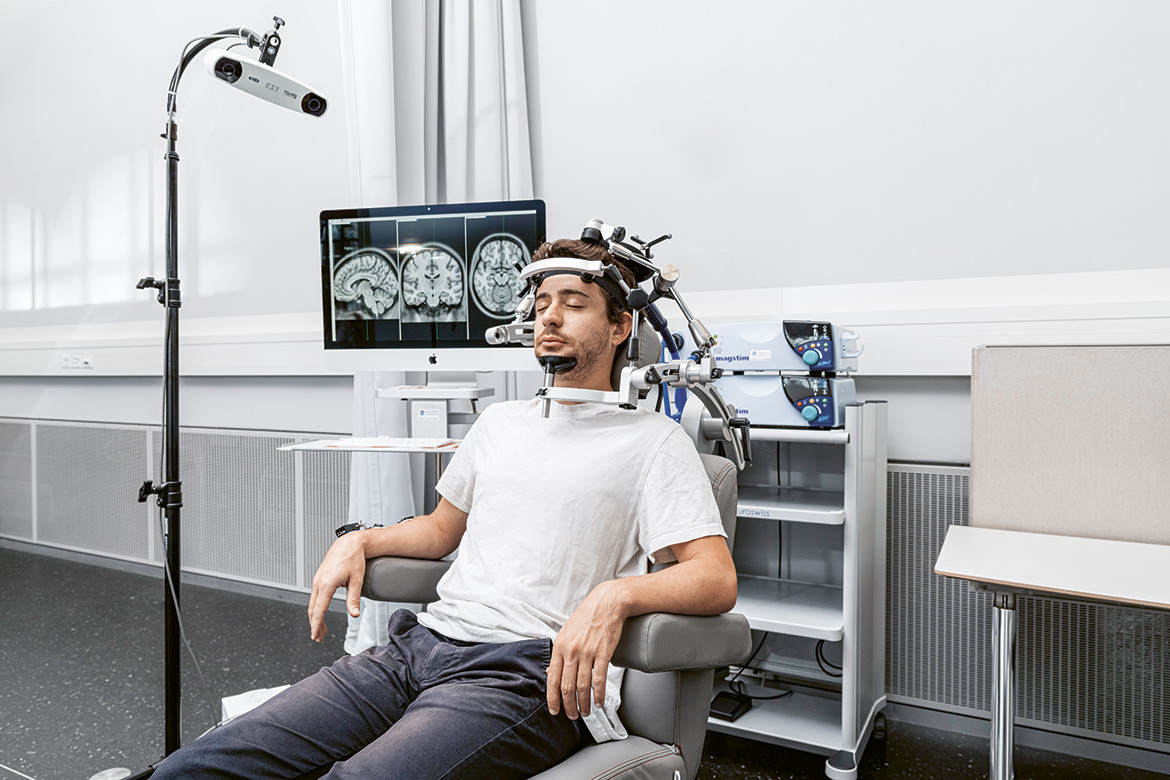
The analysis is based on the responses of 26 people who randomly listened 50 times to six vocal examples composed of their voice more or less mixed, by vocal morphism, with that of a person of the same sex. The sequences were broadcast by bone conduction (using a commercial headset) or air conduction (using a laptop loudspeaker). Participants were fitted with an electroencephalogram (EEG) to record in real time the neural activity related to their own voice and to correlate it with response performance (mean time and accuracy) when clicking a computer mouse. This performance was better when the sound was broadcast using bone conduction.
These results may be useful in the search for the still unknown mechanism of auditory-verbal hallucinations. It is assumed that these symptoms, known particularly in schizophrenia, are linked to a deficiency in distinguishing one’s own voice from that of others.