
Research deprived of academic freedom would generate only conformism
As with all fundamental concepts, academic freedom is constantly brought into question, says Laura Bernardi.
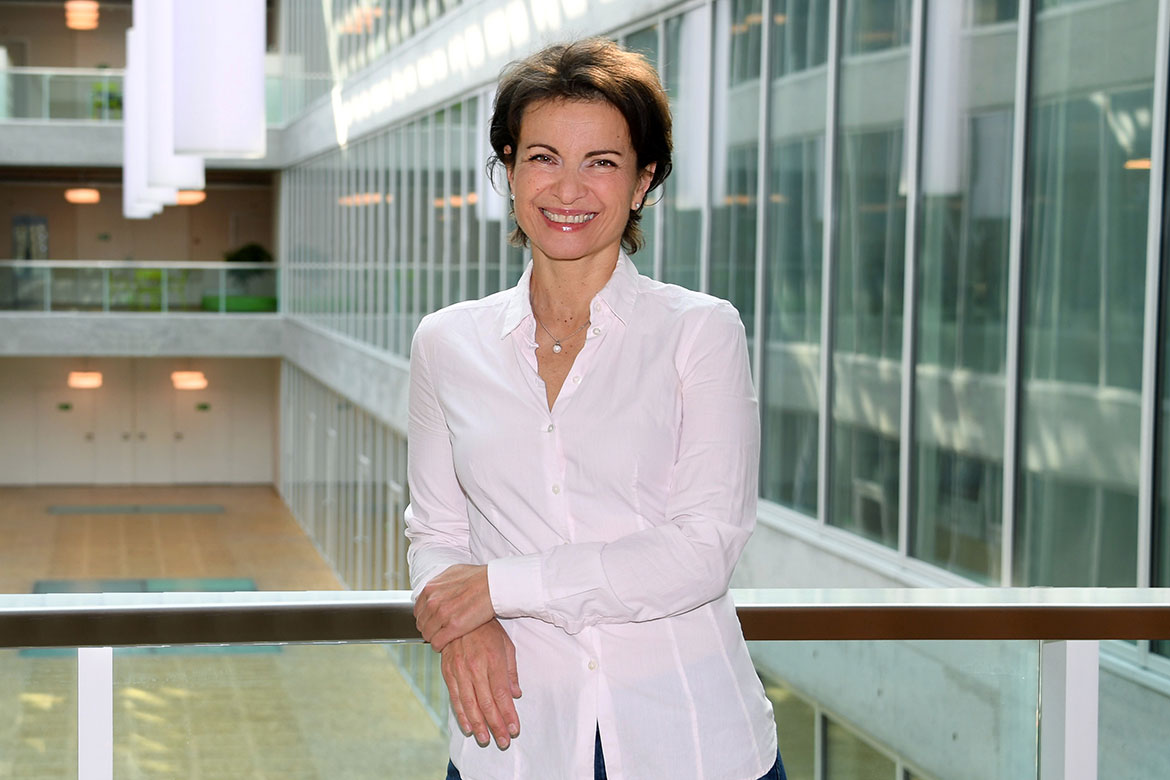
Laura Bernardi is the Vice-President of the National Research Council of the SNSF | Photo: Université de Lausanne
Aldo Moro, the head of Italy’s Christian Democrats in the 1970s, is known for having been murdered during some of the darkest years of the country’s politics. What is less well known is that he was also held as an exemplary professor of criminal law by his students. As an academic, he consistently encouraged students whose political views diverged from his own to engage in dialogue based on the analysis of arguments, the assessment of evidence, and the identification of potential biases.
These skills are the very basis for academic freedom: For its absolute necessity and its responsibilities. Academic freedom is a luxury of democracies, according to the 2023 Academic Freedom Index. Only one person in three lives in a country enjoying a satisfactory level of academic freedom, with relatively high variation even within European countries. Despite being a knowledge-based economy, Switzerland scores lower than its neighbours Italy, France and Germany and is closer to the Netherlands and the UK.
Why does such a concept, that has been around for centuries, still make the headlines today? One possibility is that, as with all fundamental concepts, it is constantly brought into question. Only in a context of academic freedom, in fact, can uncomfortable truths be explored, conventional wisdom be challenged, and the boundaries of knowledge be pushed back. Research, teaching and public debate deprived of academic freedom would only generate conformism and stagnation. Another possibility for the renewed attention to academic freedom these days is related to current funding restrictions, political pressures, and misleading information. They all may threaten academic freedom when they present scientific progress as only being valid if it has an immediate application, even when related to global challenges and societal needs. Likewise, they may also threaten it indirectly when they curtail the spaces where diverse voices can co-exist and be heard through institutional reforms. Too much orientation in research does not benefit knowledge.
Like every privilege, academic freedom also comes with responsibilities, closely related to Moro’s lessons on dialogue, solid arguments, and awareness of biases in interpretation. The responsibility of academics to present ideas in a respectful and scholarly manner, to be open to critique or confirmation and to be willing to revise them when evidence demands it. As Moro used to say, reconciling freedom and its responsibility: “True freedom is lived laboriously amidst constant traps”.


