
Swiss servants of the colonies
Poverty drove thousands of Swiss men to work as mercenaries for a repressive colonial regime in the East Indies. Almost half of them paid with their lives.
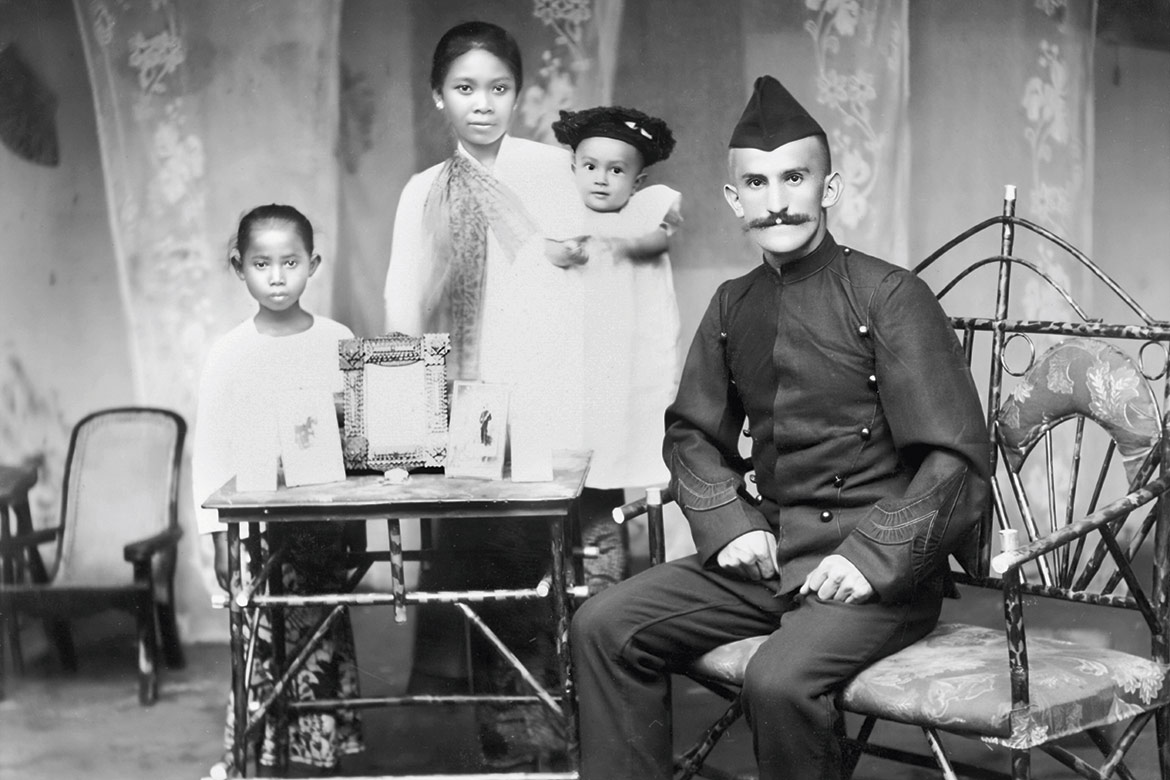
According to his descendants, the Swiss mercenary shown here was not involved in hostilities in the colonies. | Photo: Schweizer Sozialarchiv
From mediaeval times onwards, Swiss men often went to serve as mercenaries for foreign warlords. In later times, they became increasingly in demand overseas – such as in the Dutch East Indies (now Indonesia). According to the investigations of the historian Philipp Krauer, some 5,800 Swiss mercenaries served in the Dutch colonial army there between 1848 and 1914.
They aided Dutch rule, often by brutal means. “Some mercenaries sat at their outposts while others set fire to fields and burnt down whole villages during their missions, using force against plantation workers from China and Java”, he says.
Krauer wrote his doctoral thesis at ETH Zurich, where he analysed sources such as ship manifests, letters, diaries and memoirs. Most of these soldiers were young, from poor families, and had no prospects at home. Some set out on their journey out of a thirst for adventure. The municipalities back in Switzerland were in favour of emigration, because it meant they could save on the social costs that might otherwise be incurred. Those who returned after 12 years received a small pension from the colonial army and hoped for social advancement – though often in vain.
“In their personal environments”, says Krauer, “these veterans told stories full of racist clichés”. But many emigrants left their homeland never to return: some 45 percent of them died in the line of duty. Most of those who survived returned to Switzerland, with only a few remaining overseas.