Ancient rock survives constant motion
Simulating the Earth’s mantle over 4.5 billion years
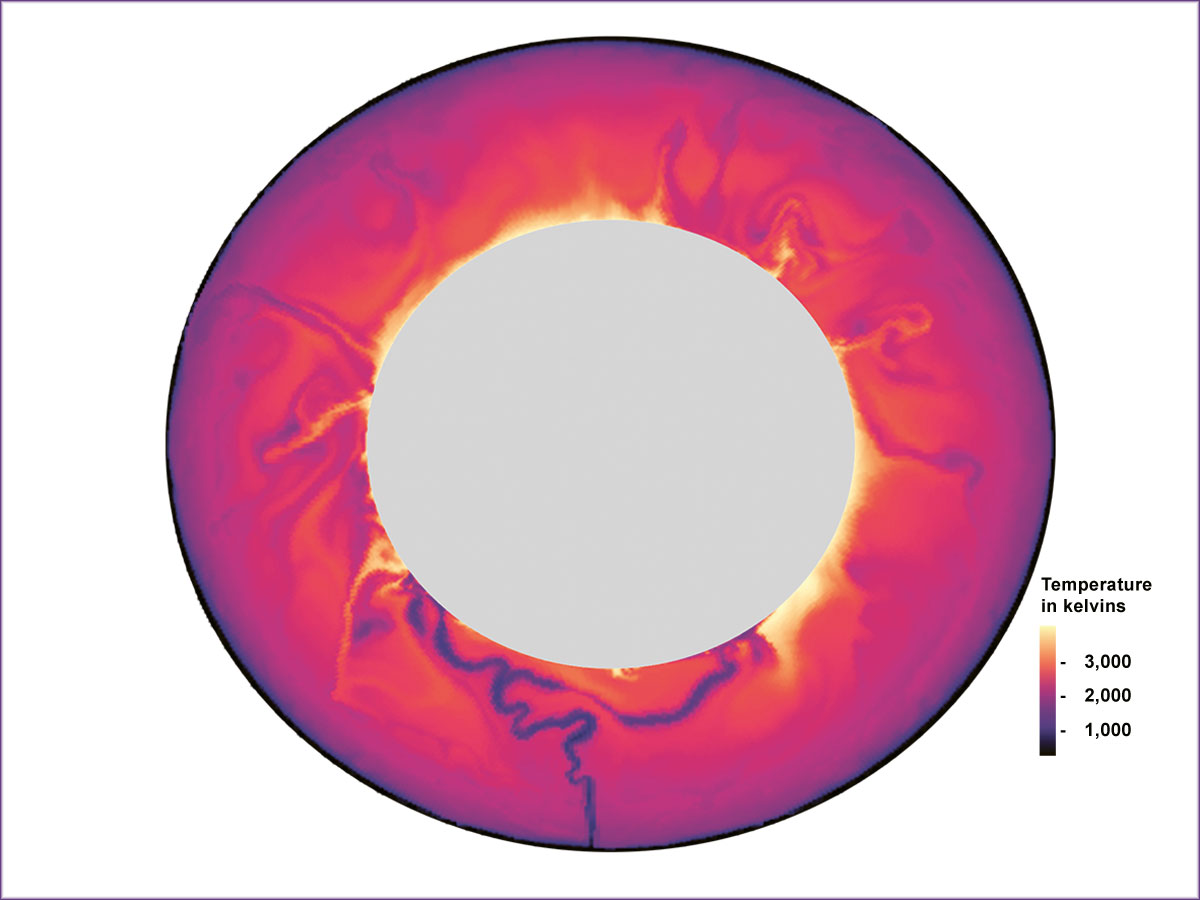
The processes in the Earth’s mantle during 4.5 million years are simulated here. | Image: M. Desiderio et al.
The Earth’s mantle could provide clues about the formation of our planet – assuming that its original structures have been preserved. However, the Earth’s crust is constantly being recycled, meaning that the mantle is always in motion. Researchers at the University of Bern have now simulated these processes.
The image here shows the temperature conditions today, after 4.5 billion years of mantle motion. The study concluded that some of the ancient rock has indeed been preserved, despite the movement caused by plate tectonics.