Five opinions on an open end
From self-optimising and ageing to euthanasia: We offer five perspectives on ageing and the challenges it brings.
“A year of living healthily is incredibly valuable”

The hype around longevity
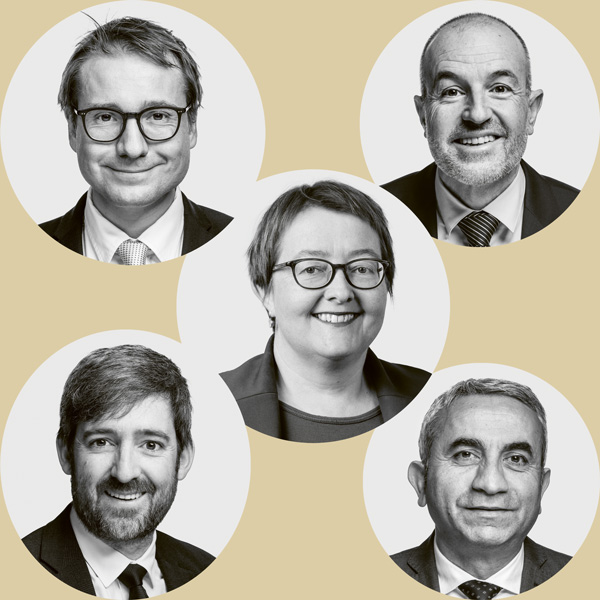
Manuel Puntschuh (44), doctor and manager of the Origin Health practice in Basel.
Manuel Puntschuh, how old would you like to become?
Old enough without ceasing to enjoy my life – with my grandchildren and great-grandchildren, eating, laughing and travelling together. Whether that means I live to 90, 100 or 120 doesn’t matter.
You speak of ‘healthy longevity’. But what does this actually mean?
It’s about staying healthy for as long possible by having a positive impact on the things that age us and that bring diseases with them. I’ve always found the term ‘anti-ageing’ awful, as it assumes that ageing is something negative. Longevity, on the other hand, asks: ‘What happens biologically, biochemically and genetically in our cells? And how can we influence all that?’
So do we really have the prospect of eternal life?
No. From today’s perspective, I consider the prospect of extending life to 200 years to be extremely difficult and indeed simply unattainable. However, if we can move the starting point of typical illnesses further down the line, then we will gain healthy years. That also means, almost automatically, more years of life overall.
You are critical of the medical profession today. Why?
Traditional medicine treats symptoms. We spend billions on diabetes medication, and yet the number of diabetics continues to rise. These drugs help us to manage the illness, not to cure it. Longevity, on the other hand, starts earlier. We want to measure insulin resistance and risk factors before diabetes or a heart attack have occurred.
You company’s analyses are expensive. Is what you offer just a privilege for the rich?
I would have liked longevity to be available to everyone. But there’s a gap between what we want and what is realistic. Many diagnostic investigations and therapies are expensive and aren’t covered by health insurance. Unfortunately, staying healthy is a private matter.
What drives you in this?
There are no heroes in preventive medicine. No one congratulates you when nothing happens. But a year of living healthily is incredibly valuable.
What can I expect to pay if I come to your clinic?
A basic package costs CHF 1,000 to 2,000. Most of that is for laboratory analyses, supplemented by special tests on epigenetics, your immune system and gut. Then we ask: What is the state of this person now? Where can we optimise something? The classic reference values don’t automatically mean that things are optimal. We set the bar higher.
But you’ve got no evidence for the efficacy of your therapies.
We haven’t got data going back 80 years. But we can see enough to be able to draw conclusions and to act accordingly. We often work with animal models or epidemiological studies.
Do you also test things on yourself?
Yes, of course I try a lot of things. I also have easy access to the tests. Besides that, I also watch my diet and my weight, I do sports and take nutritional supplements. I’m constantly working on optimising things in myself.
Isn’t this ultimately just about biohacking?
‘Biohacking’ isn’t a clear-cut term. I understand it to mean being able to measure the decisive levers: your weight and metabolism, cholesterol profile, cell health, activity and fitness. These data can then be used for purposes of targeted, personalised optimisation.
On your website, you also refer to the controversial longevity guru David Sinclair.
Sure, he’s controversial. And not everything he says has turned out to be true. But he’s changed the way we think, away from thinking about illness and towards ageing processes instead.
“Our elites have always been mostly male and elderly”

An ageing population
Valérie-Anne Ryser (50) researches into families at the Swiss Competence Centre for Social Sciences (FORS), Lausanne.
Valérie-Anne Ryser, according to a YouTube scientific video entitled ‘South Korea is over’, the birth rate of that country is so low that the ageing society can no longer renew itself. Is this too pessimistic?
What is happening in South Korea is indeed extremely worrying. The average number of children per woman in 2024 was among the lowest in the world. This film shows the multiple consequences of the birth rate, with industrial wastelands and deserted schools. It helps to raise awareness of the problem, but I have my reservations about these data.
What are those reservations?
They use the birth rate, which does not consider the number of children a woman will have on average during her life, but the average number of children per woman during a given year. It therefore does not take into account the postponement of pregnancies to older ages. This is how the film misses the rebound in births since 2024, as well as the role of migration in demographic regulation. It also does not discuss the effects of the fertility policies adopted in recent years.
For a long time we talked about overcrowding and suddenly we don’t have enough babies anymore. Did I miss something?
The current demographic change reflects rapid and profound societal changes: progress in education, successful family planning, better professional integration of women. These dynamics are particularly marked in South America and Asia.
Successes that lead to the extinction of humanity?
We still have some margin! That said, it is true that the birth rate is falling almost everywhere, except in some regions of sub-Saharan Africa. People are gradually becoming aware of the demographic challenge. Some are betting on birth bonuses, e.g., Viktor Orbán and Giorgia Meloni. But these measures are barely effective: in Europe, the countries with the greatest gender equality – the Scandinavian countries – maintain higher birth rates. As long as reconciling work and family remains difficult, especially for women, who still mainly support domestic tasks, children will remain perceived as obstacles to self-realisation, to careers. Couples will hesitate to have them. Nor should we forget the role of economic vulnerability, which lasts longer and longer and contributes to postponing parenthood.
And the problem is self-reinforcement. The older the society is, the less it is interested in the problems of young people.
This is not new: politicians and our elites have always been mostly male and elderly. However, there are also shortcomings in the care of seniors. For example, society does not train enough geriatricians. So coming back to your mention of self-reinforcement, I don’t know if the two things are related.
What can we do then?
The pension system must be adapted, unlinked from its 1940s model. The economy must change profoundly. In addition, greater professional flexibility, improved childcare assistance and parental leave would already make it possible to better reconcile work and family. But I remain optimistic: the norm of two children still dominates and there are many couples who want more children than they actually have.
“The actual secret is: don’t drink, don’t smoke, do a lot of exercise, and be born rich”

Blue zones
Saul Newman (40) is an interdisciplinary research fellow at the Oxford Institute of Population Ageing.
You studied medical research and worked as a plant scientist later. Why are you interested in ageing?
My interest has continued since my PhD on the evolution of ageing. It’s a mystery: Why do we survive at all after reproductive age?
What made you such an outspoken critic of the concept of the so-called ‘blue zones’ with more old people who are healthier and happier than the rest of us?
It started with a paper published in Nature, where the authors claimed, based on demographical data, that there is an upper limit of 125 years to the human life span. But the article contained fundamental methodological errors, like simple rounding mistakes.
So you agree with the blue zones when you say that there is no upper limit?
No, I don’t agree either with an opposing claim that was published in Science. It states that mortality flattens out at very old age. Methodologically it is even worse than the Nature paper. To understand, let’s imagine a hypothetical group of 100,000 people who are 50 years old. Say that there is an error in the data where one in a thousand of those people is actually 40 years old. After 50 years, these ‘errors’ will have survived better than the people who were really 50 years old. Your data becomes more and more distorted as time goes on. So both opposing camps have missed a third, very obvious solution: that the limit of your survival depends on the environment.
There are at least five ‘agreed upon’ blue zones in remote areas in Costa Rica, Sardinia, Greece, California, and Okinawa. What is your strongest argument that they are a myth?
Every single time you have independent evidence, the claims do not hold true. Take your pick among the blue zones. In Okinawa the government found that 82 percent people of the people were already dead. Pension fraud plays a huge part. There is a reason why they are all in the poorest parts of the country. The Greek statistical bureau flagged it when it discovered that they were handing out pensions to 30,000 dead people. It’s hugely embarrassing. The US blue zone was created to please the editor of the National Geographic as the author freely admitted. ‘Blue zones’ is a company. They are selling licenses to become a blue zone. This deeply undermines trust in science.
But the basic claims are commonsensical, aren’t they? Have a regular social life, avoid stress, eat less – mostly vegetables – and don’t smoke.
The claim that you can hang out with your friends and drink while moving only moderately sounds great. But no! Let’s take Okinawa: They have the lowest intake of vegetables in Japan, they have the worst health and the worst body mass index since they were first surveyed in 1975. There has never been any real connection between the claims and the reality. In fact, you should run marathons and pump iron. It’s difficult to get old.
So where are people actually living the longest lives?
The blue zone proponents look at the number of people over 100 years old. As I said before, this is a very problematic indicator and full of biases. You should take the average life expectancy, which is a much more robust indicator. If you do that, you’ll learn the secret: don’t drink, don’t smoke, do a lot of exercise, and be born rich.
“It’s not about Christianity, but simply about humanistic and reasonable morality”

The problem with assisted suicide
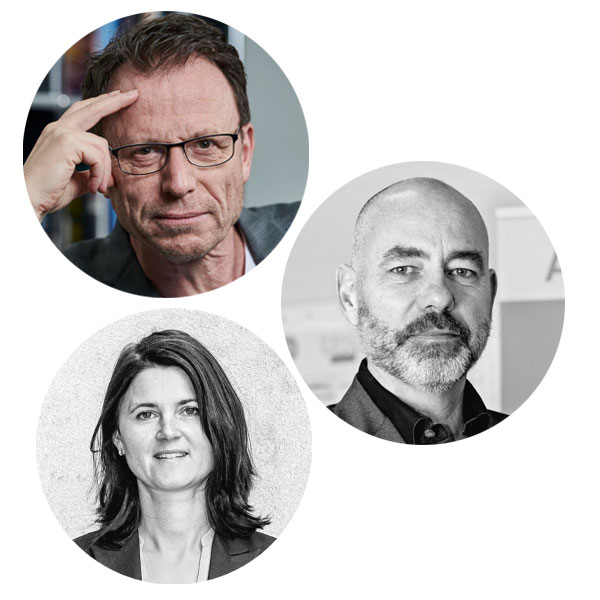
François-Xavier Putallaz (68), a philosopher and ethicist, and a former member of the UNESCO International Committee on Bioethics.
François-Xavier Putallaz, the Japanese film ‘Plan 75’ portrays euthanasia as a service offered by the state to the elderly. Are you really afraid that this dystopia will soon become a reality?
There are situations where pain resists treatments and pushes a patient to commit suicide. We imagined that such situations would remain exceptional, but it has turned out differently. In 2003, Switzerland had 187 assisted suicides; with 1,729 assisted suicides in 2023 – plus 200 foreigners – or five every day, the situation has changed considerably. The reality is therefore this: in 20 years, the number of assisted suicides in Switzerland has jumped by more than 800 percent, due to the expansion of the criteria. In 2004, it was first reserved for people at the end of life, then offered in 2014 to patients disabled by multiple pathologies due to aging, and in 2024, a doctor was acquitted after helping a healthy person commit suicide. The process is inevitable.
Is this a problem? Why not help people capable of discernment to end their lives?
For a hundred years, Switzerland has decriminalised assistance and incitement to suicide, provided that there are no selfish motives. This is the only requirement, and the Criminal Code does not set any medical standards. If individuals choose to end their lives, we do not see why we require medical criteria to assist them: indeed, why would one have to be sick to be free? It’s absurd. So the world’s first use of the suicide capsule in 2024 in Schaffhausen brought to light a truth: assisted suicide isn’t a medical matter.
Whether it is a matter of medicine or not, is assisted suicide inherently problematic from a Christian point of view?
It is not about Christianity, but simply about humanistic and reasonable morality. When we see extreme suffering, we can understand the despair of people who shorten their lives, and no one will judge it. But these circumstances do not change the nature of the suicidal act: voluntarily causing death undoubtedly remains problematic. And common morality requires that we stand by others, by taking care of them. Not that we leave their side. However, suicide assistance doesn’t complement care, it stops it.
Isn’t the ethical situation symmetrical when it comes to prolonging life through medical measures? Is it not on the one hand an artificial shortening of life, and on the other an artificial extension? Where are the differences?
Artificiality is not the ethical criterion. First of all, yes, it is a moral mistake to prolong a human life at all costs. But here’s what is important: when unnecessary treatment is interrupted, it is the disease that takes the patient. When euthanasia or assisted suicide is used, it is a person who intentionally produces death. Between the two acts, there is an abyss. With a little good faith, everyone can understand it.
“We could also revere people in old age – not that I’d wish any such reverence on myself”

Happiness in old age
Katja Früh (72), author, director and pensioner in Zurich.
You once said that you can accept being old. That doesn’t sound very euphoric. Is a long life more of a curse than a blessing?
I’m 72 now, and the older I get, the more I think it could go on like this for a while longer. I find my current phase of life very pleasant and beautiful. But I still don’t have any burning desire for an incredibly long life. There are many aspects of old age that I don’t find desirable.
Do you make a special effort to ensure that your life stays as beautiful as it is?
No. For example, I don’t live a particularly healthy life. Nor do I think it worth living if you have to mortify the flesh to do so. Of course you shouldn’t ruin yourself through overindulgence. But I think it’s wonderful to enjoy life’s pleasures.
What do you think of all the people who try to stay as young as possible through sport, diets or taking on a life coach?
It’s absurd for people to think that they can have everything under control. Anything can happen at any time. That’s life. To kick against these imponderables would be too exhausting for me and too inconducive to pleasure. I also see how some joggers try to run away from death. But that’s not an urge I have.
You once wrote that you don’t have to please anyone anymore when you’re old. What does that mean for you personally?
Well, I might have gone a bit too far with that. We always want to please – in other words, I’m still vain. But on a professional level, I don’t have to prove so much anymore. I’m no longer dependent on good reviews, admiration or recognition.
I’ve read that you would like to glide into death at the end of your life, as it were, using drugs. Are you afraid of death?
No. I wouldn’t put it like that. Just like everyone, I’m afraid of severe pain. But not of the end of life itself. I’m more curious about the experience. And I do find mind-expanding drugs especially interesting, because they can take me somewhere else. I think it would let me get a different perspective on dying.
What does our approach to old age say about our society?
Not much that’s good. I find it incredibly sad how little respect is shown to old age. We could also revere the elderly – not that I would wish any such reverence on myself. But what’s happening today is demeaning. Old age is seen as a nuisance. People don’t want to see themselves in a mirror. They don’t want to see that they, too, are growing old. They don’t want to accept their own decay.
What would you like society to do regarding its approach to old age?
There should be less focus on what people can achieve. More togetherness. More openness. I’d like young and old to benefit more from each other. Old people have so many interesting stories to tell, and young people can give so much to old people. I’ve realised this because I’m surrounded by young people myself. It keeps me lively.
How old would you like to become now?
To be honest: I do ponder that now and then. I always used to say: 70. Now I’m already over 70 and naturally want to get a bit older still. This is why I’d now say 80. But when I’m 80, I might see things differently. When I look at my 80-year-old friends, male and female, they’re still really full of life. On the other hand: things get more difficult, physically speaking, from 80 upwards. But I’m not afraid to ask for help.