Mycorrhiza products fail the test

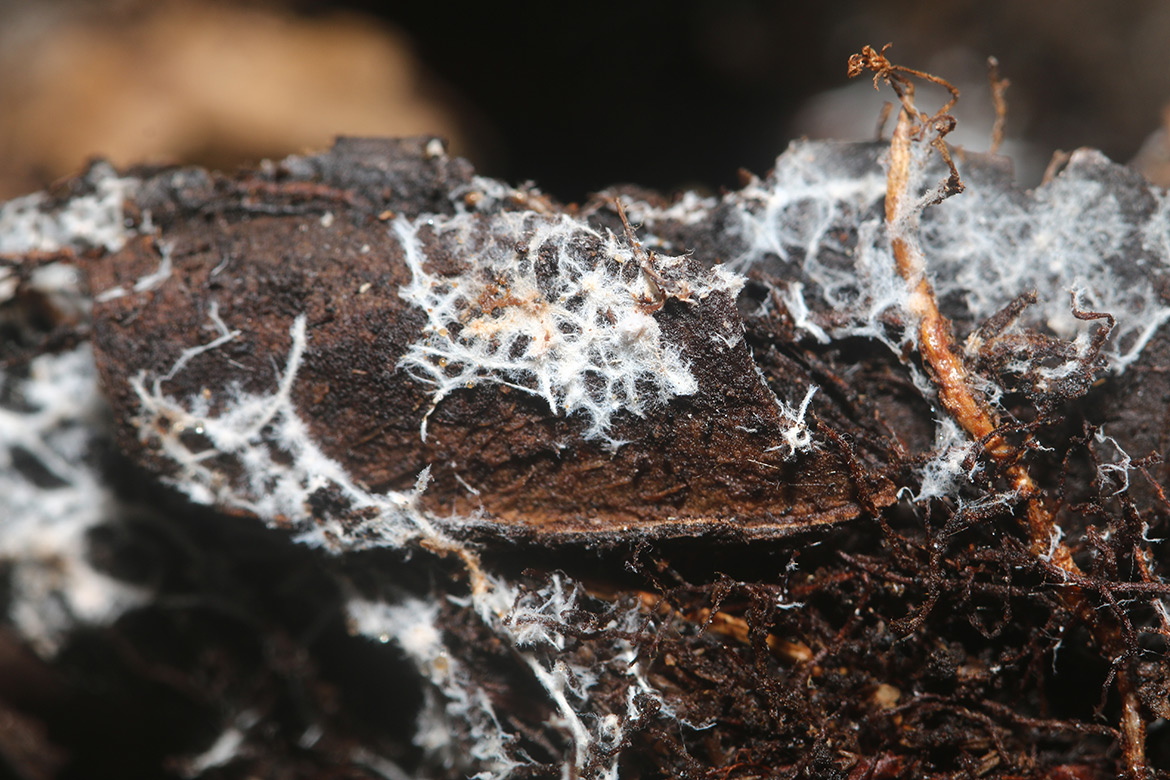
This root, coloured light blue, has formed a symbiotic relationship with a fungus. The small dark blue spheres are fungal spores; the fine threads seen here are the fungal network. | Photo: Raphaël Boussageon
Mycorrhizal fungi form a mutualistic symbiosis with the roots of most crops, improving their uptake of nutrients. Introducing them to fields has the potential to increase yields naturally. That is why the University of Zurich and Agroscope are now working on this promising method. “We wanted to find out what was already available”, says Raphaël Boussageon. He tested 16 commercial products that were supposed to contain spores or spore-bearing roots and are sold for purposes of agriculture and gardening. But the results were disappointing.
Some products did not contain any mycorrhizal inocula at all, and only three led to root colonisation and promoted plant growth. The researchers are critical of the lack of quality control for these products. To fill this gap, they have meanwhile developed a functioning product.