Creating a framework for good research
We hear from five experts working out of the academic spotlight. They explain how they contribute to sustainability, integrity, fair conflict resolution, patent protection and open research data. All these aspects help to make science credible.

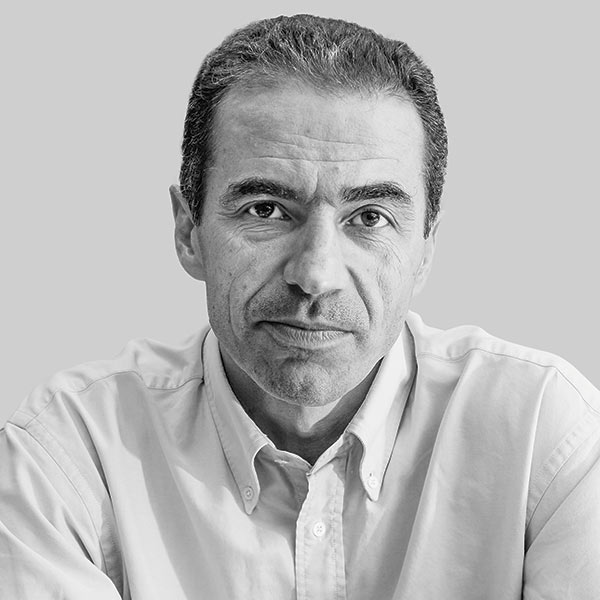
Cornelia Fürstenberger | Photo: Flavio Leone
“I am thrilled when something emerges that neither science nor industry alone could have made”.
“How can we turn research findings into marketable products? To achieve this, I build bridges between two very different systems: academia and industry. The mission of the university is to generate knowledge and to publish it. This often happens when an invention is in its very early stages of development. Industry, however, is very much oriented to resources and markets. People in industry are interested in technologies that are at a mature stage of development. This is why any invention has to be protected early on, if there’s going to be a prospect of successful collaboration.
“I tell researchers: come to us early on. That’s because you can’t patent research results after they’ve been published. Many researchers find it strange to break away from an academic mindset and adopt an economic perspective instead. But as a technology transfer manager, I move in both worlds. My roots are in academia, but I also have experience in industry. That helps.
“It’s my job to work together with researchers to identify the potential of their work, to protect any exciting findings they generate, and to accompany them on the process of implementation, right up to the proof of concept. Our focus is on contracts and protecting intellectual property. Researchers submit a notice of invention to us, then we assess it together. We can only protect inventions that have creative, innovative value. Discoveries, however, can’t be protected. When an invention is to be developed further, we help researchers in their search for a partner in industry, or in setting up a spin-off company.
“I supervise projects in the life sciences, ranging from malaria research to cell therapy. This involves many exciting discussions. Every year, we sign hundreds of collaborative agreements and technology licences. I am thrilled when something emerges that neither science nor industry alone could have made”. kr
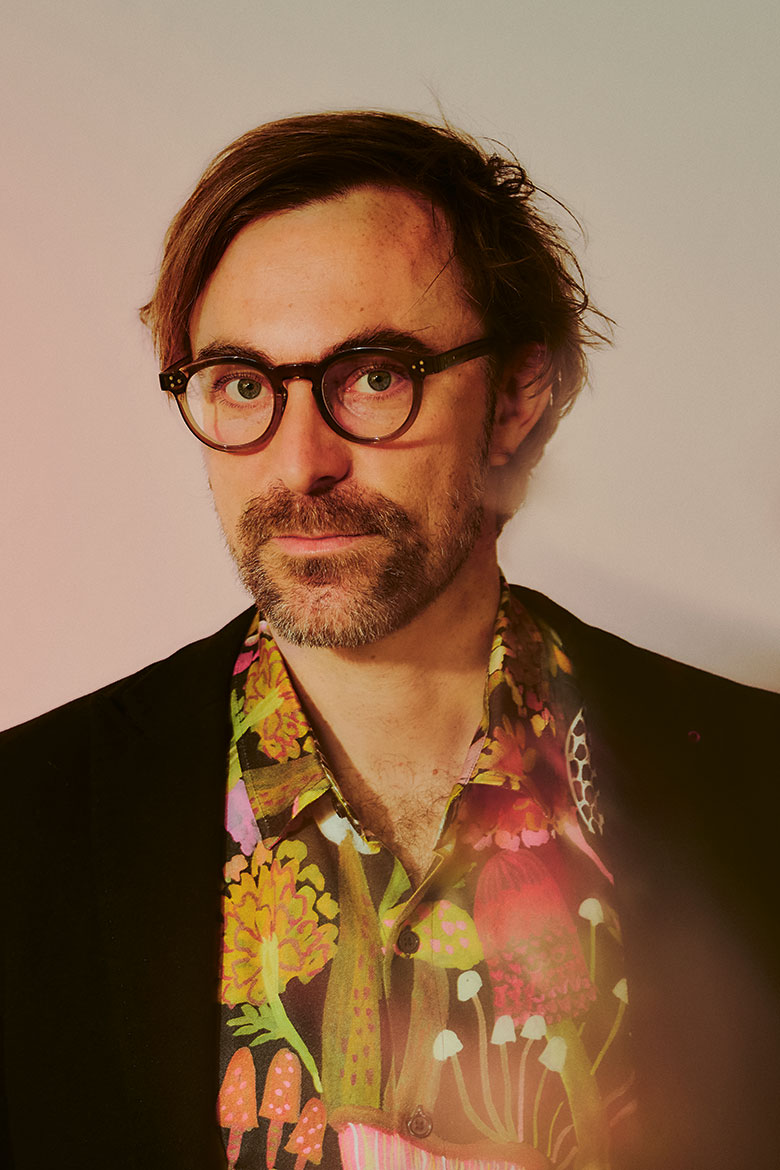
Jonas Nakonz | Photo: Flavio Leone
“A negative comment can destroy a whole career”.
“More than anything else, I see conflicts between professors and their doctoral students. This is one of the most vulnerable relationships in the academic system. There’s a big power imbalance, and many doctoral students endure stressful situations for a long time simply because they’re worried about their future. Their fears are also often justified, as a negative comment from an influential person can destroy a whole career.
“As an external ombudsperson, I am a point of contact offering confidentiality for people at universities who’re caught in conflict or find themselves confronted with inappropriate behaviour. What’s important is that everything I hear stays with me. The ombudsmen don’t even discuss cases with each other. My goal is to empower people who come to me for advice and to enable them to navigate difficult situations better. I also supervise conflict discussions. Above all, that means you have to be able to get to grip with the issues quickly, and you have to have empathy.
“Regrettably, I often find that people only come to me when a conflict has already escalated to such an extent that there’s little left that can be repaired. All we can do in those situations is to work towards an amicable separation, though earlier counselling could have offered a chance to deescalate.
“I also aim to make structural problems visible. To this end, I engage in dialogue with management, doctoral students and committees, pointing out where systemic problems are leading to conflict. It’s often a question of leadership. For decades, leadership issues barely played any role when selecting professors. That’s changing, but more is needed – we need to have clear guidelines, support for people in leadership positions, and a culture of open dialogue.
“We deal with roughly 130 cases every year here at ETH Zurich. What frustrates me the most is when my hands are tied simply because the people who’re stuck in a problem won’t give me permission to act. Sometimes, the risks involved for them are simply too great. But I also often experience situations where we’re able to solve conflict, or at least improve things. It’s those moments that I find energising”. kr
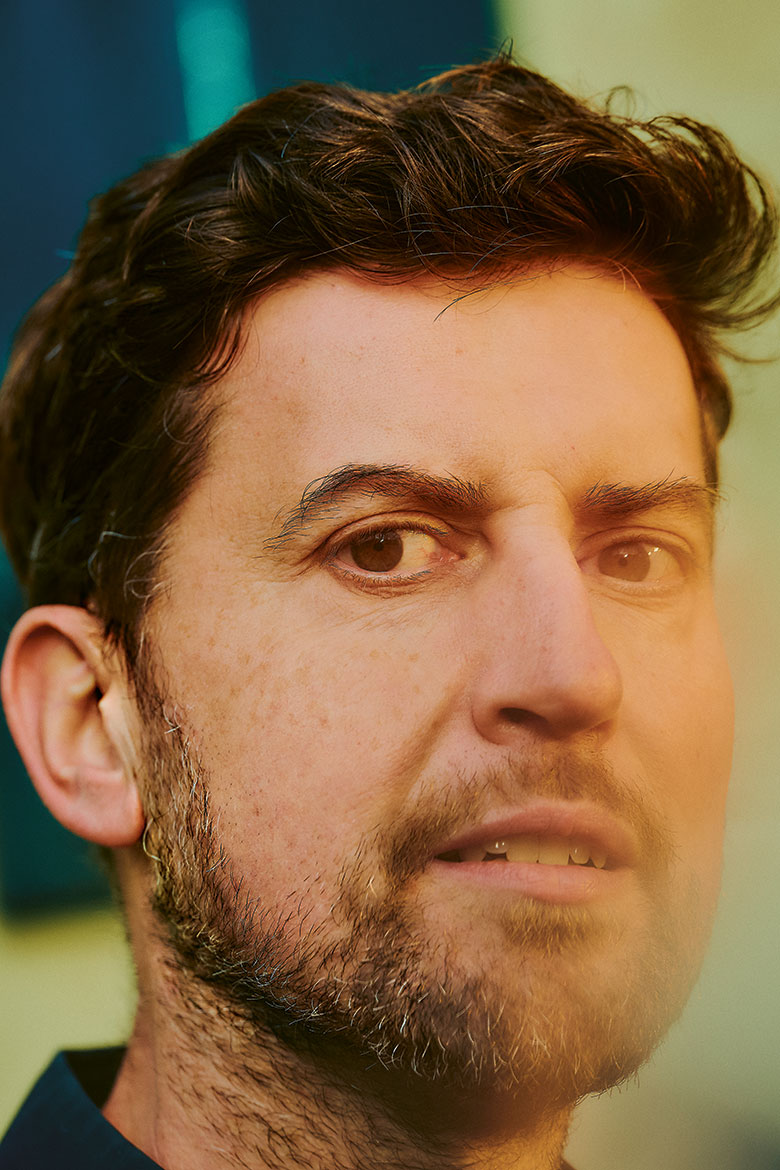
Manuel Fischer | Photo: Flavio Leone
“The societal impact is too little acknowledged”.
“Sustainability topics are increasingly triggering extreme reactions, especially on social media. There are even researchers who today think twice before commenting publicly on them. But this radicalisation has also triggered a counter-movement. Many people can see more clearly than ever before just how urgent our societal crises have become – and they’re getting more actively involved. Now’s the time to decide what direction we want to take.
“Our university is playing a central role in this. It’s my task to anchor sustainability firmly in what we do: in research, in teaching, in everyday operations and in our collaborations with society. Sustainable development doesn’t just mean climate protection. It also concerns social and economic aspects such as inclusion, equal opportunities and responsibility.
“A large part of my work involves creating networks between people. Sustainability demands a systemic perspective. Engineers, social scientists, economists, forestry experts and planners all have to work together to develop practical solutions. My team and I organise workshops and networking days, among other things, where researchers can converse with each other beyond the boundaries of their respective disciplines. We also support interdisciplinary and transdisciplinary projects. Some are aimed at reducing food waste at schools and involve the departments of food science, behavioural sciences and pedagogy. Then there are our projects on inclusive living where architecture and social work come together.
“But I see the biggest impact when people start collaborating – when different disciplines come together and something grows that benefits society. I’m especially delighted about our hub for student sustainability engagement that we’ve set up across the whole university. Students bring a lot of energy to the table, and they also have great ideas – such as a platform for a children’s bike rental service that could take the strain off families”. kr
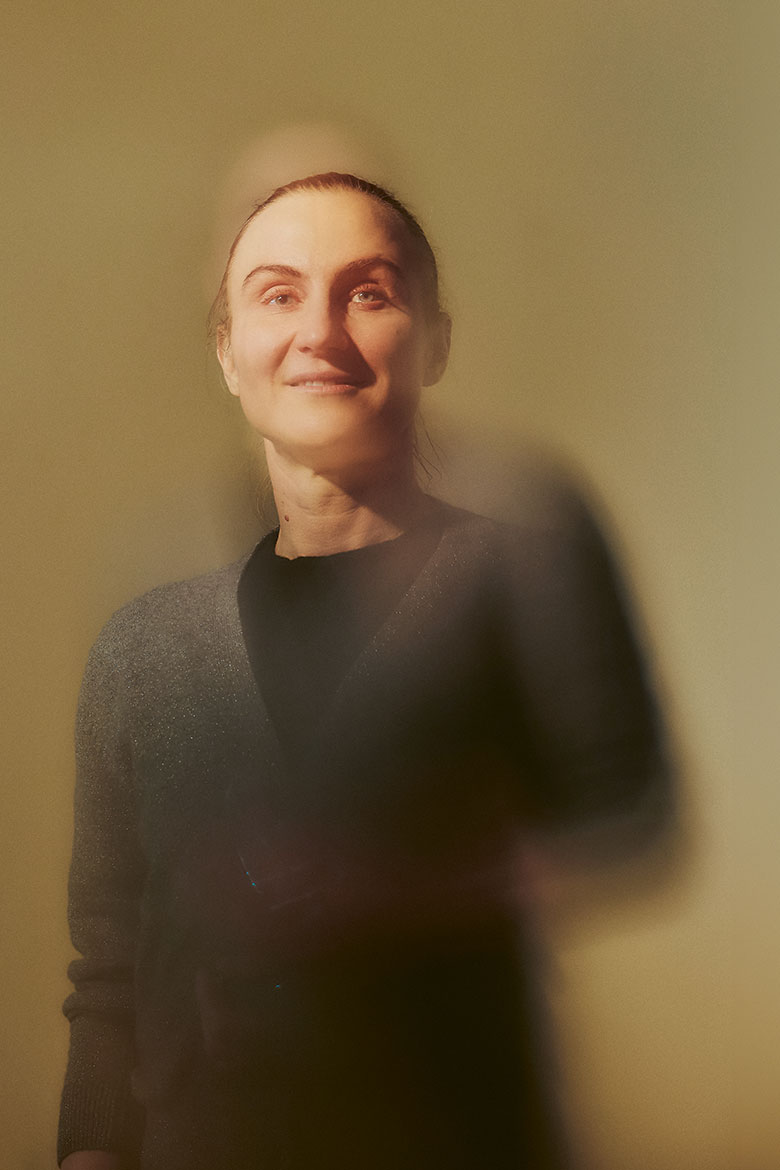
Oksana Riba Grognuz | Photo: Flavio Leone
“We create data access management platforms”.
“We talk a lot about the pressure to publish results at the expense of the otherwise essential collection, management and structuring of data. Many scientists do not feel comfortable sharing their code, and links between existing solutions are still lacking, due to a lack of energy or infrastructure. My team is leading a pilot project to highlight methodological contributions and to develop metrics in collaboration with specialists in the field. Making these aspects visible ensures the possibility of evaluating scientific quality and the potential for innovation, especially when making finance decisions.
“We support companies, NGOs, universities and hospitals. A large part of our activity is focused on biomedicine, where we apply the principle ‘as open as possible and as closed as necessary’, given the confidential nature of the data.
“In the case of software that scans the heart, for example, making the code accessible allows you to showcase the scientific contribution and increase its impact. Developing this kind of software, however, can only be done with adequate access to quality data. This is why we create intuitive, fast platforms to know what steps to take to access sensitive data in a responsible and compliant manner.
“We are also using a participatory approach by organising events, because an anchor point in the physical world is what creates real value for digital solutions in my opinion. I love seeing scientists’ eyes light up when they discover their work is recognised and reused beyond their laboratory. We provide them with incentives to share their data and analytical tools, which in turn places them in contact with the beneficiaries. The Center promotes the reuse of the existing data, while facilitating the emergence of what is missing and accompanying the controlled circulation of data. We encourage dialogue by proposing rules adaptable to different needs”. ra
Viviane Premand | Photo: Flavio Leone
“Integrity guarantees society’s confidence in science”.
“Since 1 December 2025, I have been leading the new Swiss Competence Centre for Scientific Integrity. As a lawyer and doctor of law, it’s a subject close to my heart. It’s also a chance to assist people who conduct research in Switzerland, including incoming cohorts, with these increasingly important issues to ensure society’s confidence in science. The ambitions of the CCSIS must be set in line with the stakes, in collaboration with universities and institutions.
“The Centre’s missions are defined in the Ordinance of the higher education council on quality assurance measures to ensure high standards of scientific integrity. It is composed of a council and a secretariat and also bases its work on the Scientific Integrity Code , which takes into account recent developments such as digitalisation. The code defines scientific integrity according to four fundamental principles: reliability, honesty, respect and responsibility.
“Violations come in many forms, stretching from making up results and falsifying data to plagiarism and omitting to reference authors, for example. To promote scientific integrity, the Centre functions on the one hand as a complaints platform for universities, which have the obligation to report violations. On this basis, we will publish an annual table for both the scientific community and the general public. On the other hand, the CCSIS may be consulted by institutions on procedural issues, in order to harmonise good practices at the national level. That said, our mission is not to advise individuals, nor to serve as an appeals court or tribunal. Once the Centre is up and running, I hope that my work will have an impact in favour of scientific integrity through the cases notified, the reports published and the training on offer”. ra