When the field dances
Research sometimes leads scientists to mobilise resources beyond their intellect alone. The socio-anthropologist Manéli Farahmand uses her body as a tool to learn about ecstatic dances and study new spiritualities.
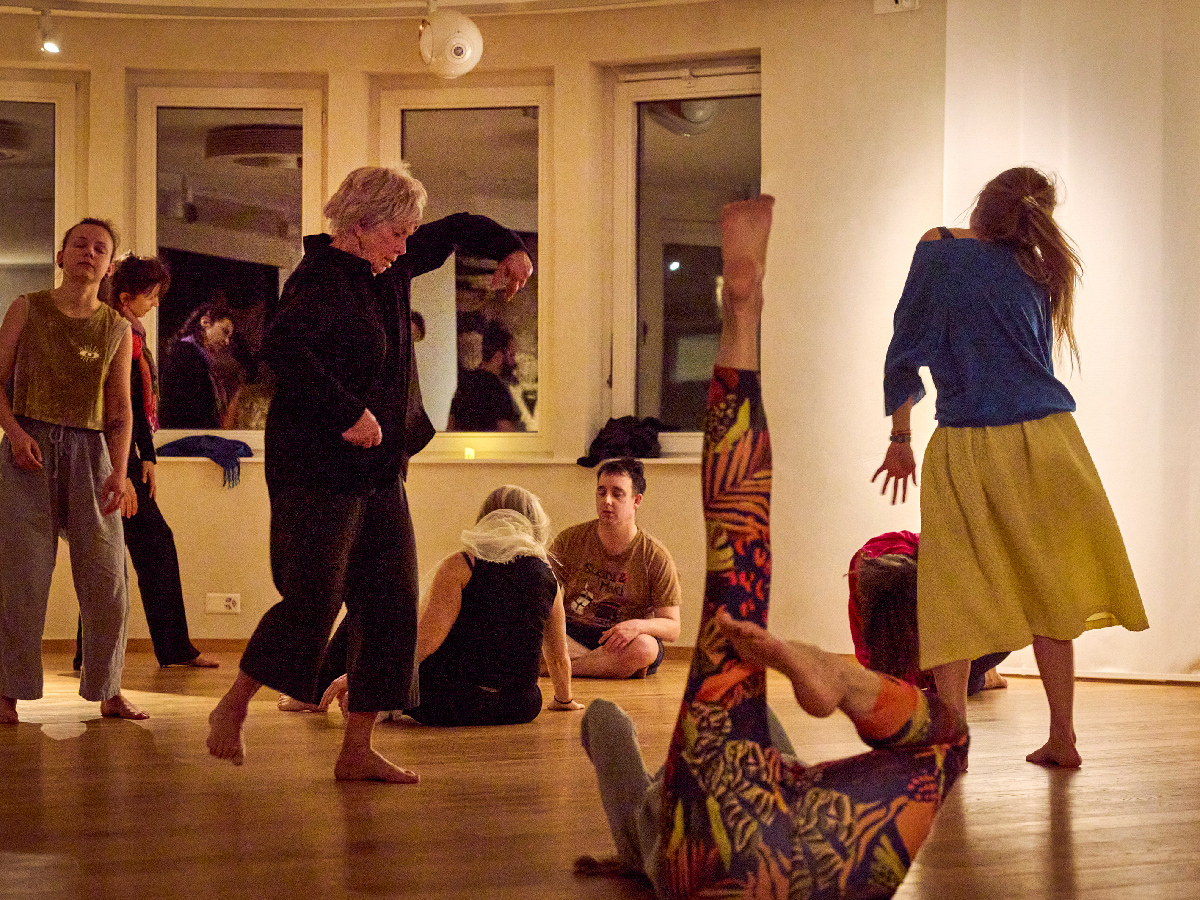
Swaying, hopping, just walking or even sitting on the floor: there’s no right or wrong way if you want to engage in ecstatic dancing. The social anthropologist Manéli Farahmand has been researching into this form of new spirituality. | Photos: Sébastien Agnetti
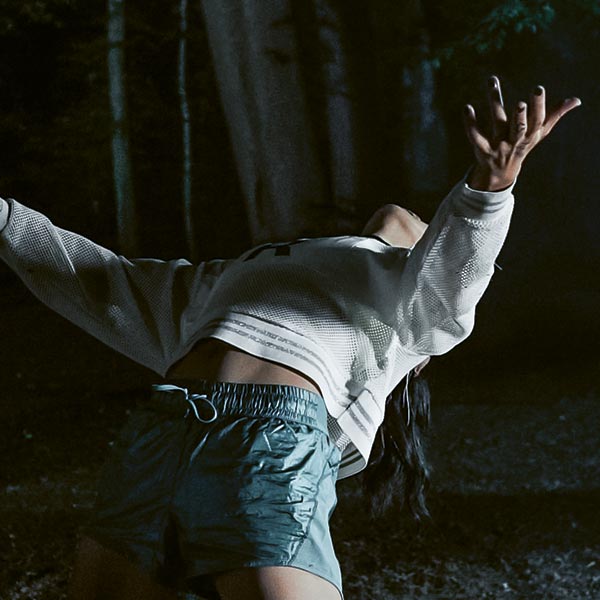
The ‘journey’ has begun. In a room not far from the station, in Vevey, about twenty dancers aged 25 to 80 years old begin moving. The music is slow, meditative. The air smells like a sauna, and candles surround the room. Barefoot on the wooden parquet floor, dancers move on the spot, while others walk, and some roll on the floor. Among them is Manéli Farahmand. She is dressed in leggings and a blouse and hardly stands out from the group. Yet she is there to conduct her field research.
Farahmand is a thirty-year-old socio-anthropologist researching into new spiritualities and an associate researcher at the University of Fribourg. As part of her postdoctoral work, she was part of a team led by Oliver Krüger studying how spirituality is increasingly being embodied in Switzerland. According to the 2024 figures from the Federal Statistical Office, the share of people claiming to be religious was 14 percent compared to 16 percent for those claiming to be spiritual. Farahmand is particularly interested in the way spirituality is increasingly mediated by the body, especially through dance.
From shamanism to dansuality
Over four years, Farahmand conducted 30 qualitative interviews and participated in 45 sessions of ecstatic dance, a family of dances practised with a view to well-being, creativity, inner transformation and spirituality. “For those who participate, the dance floor is sacred. There’s this idea that we come to find the divine in ourselves, find a space of our own and connect with others, our ancestors or something bigger”, says Farahmand.
The family of ecstatic dances has greatly diversified since its beginnings in New York in the 1970s. It now includes intuitive, Sufi-tantric and trans-shamanic dance, ‘dansuality’ and other variants. Farahmand has mapped them in Switzerland and identified roughly thirty labels. “I was surprised to see that there are so many. There is abundant creativity, from the most spiritual to the most therapeutic, and many are hybrids or combinations”.
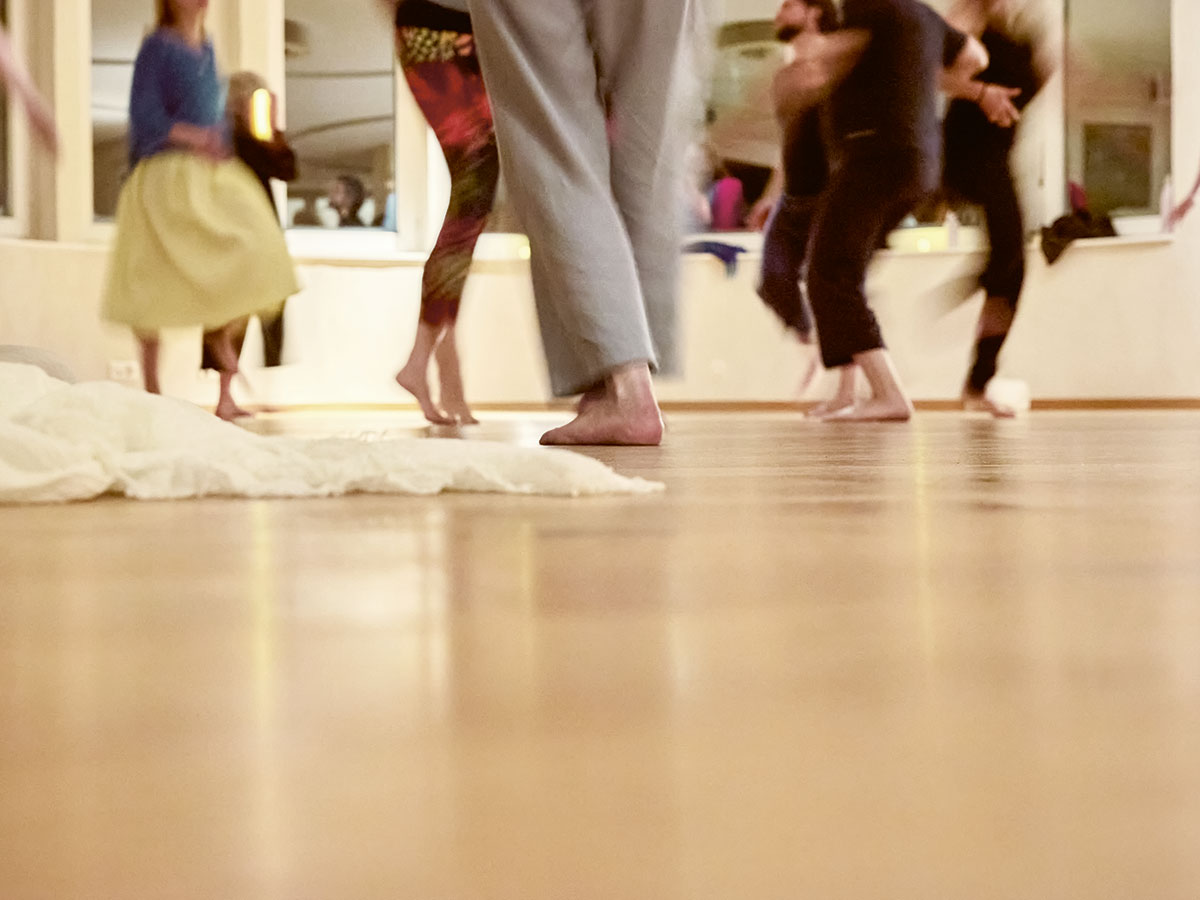
“For those who participate, the dance floor is sacred”, says the socio-anthropologist Manéli Farahmand. “There’s this idea that we come to find the divine in ourselves, or connect with something bigger”. | Photos: Sébastien Agnetti
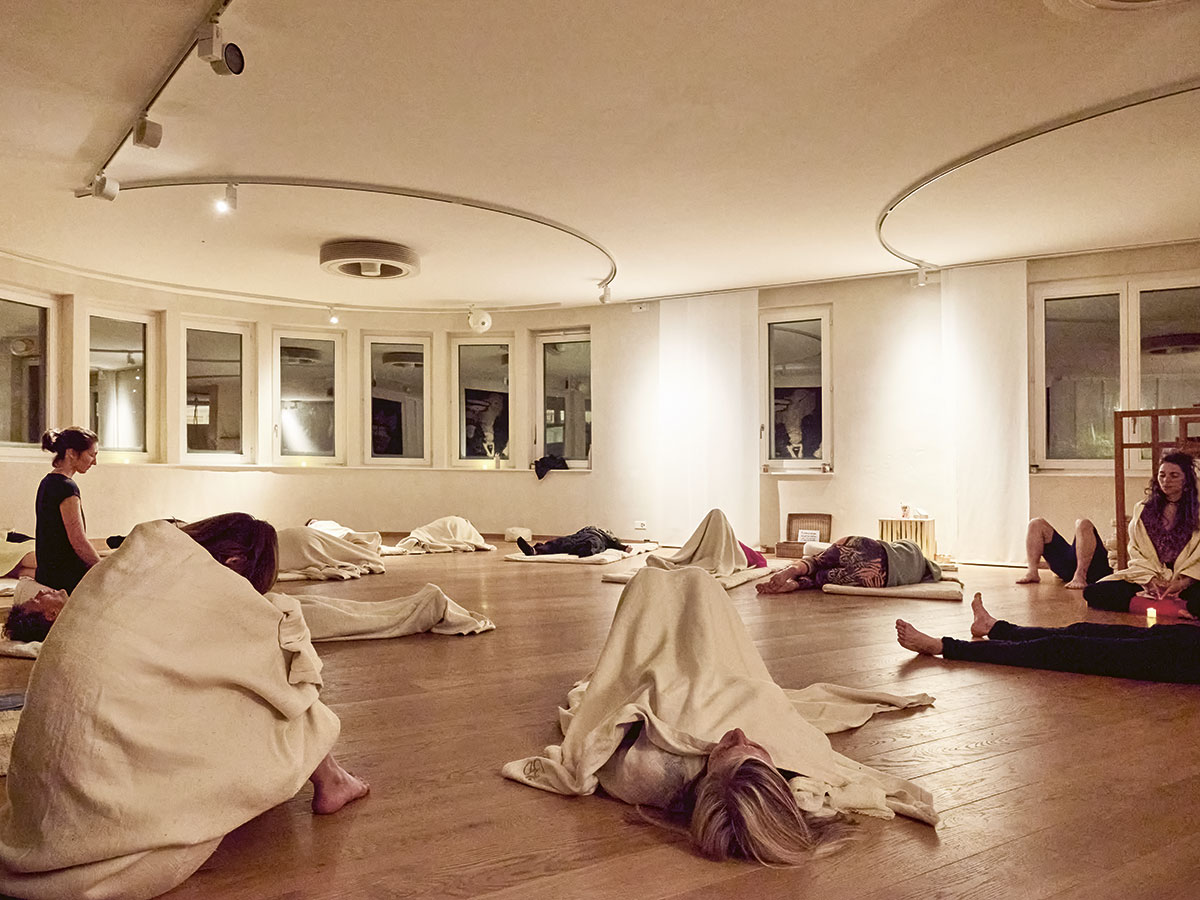
The sessions proceed as if in waves. At the end, there’s also a moment for meditation.
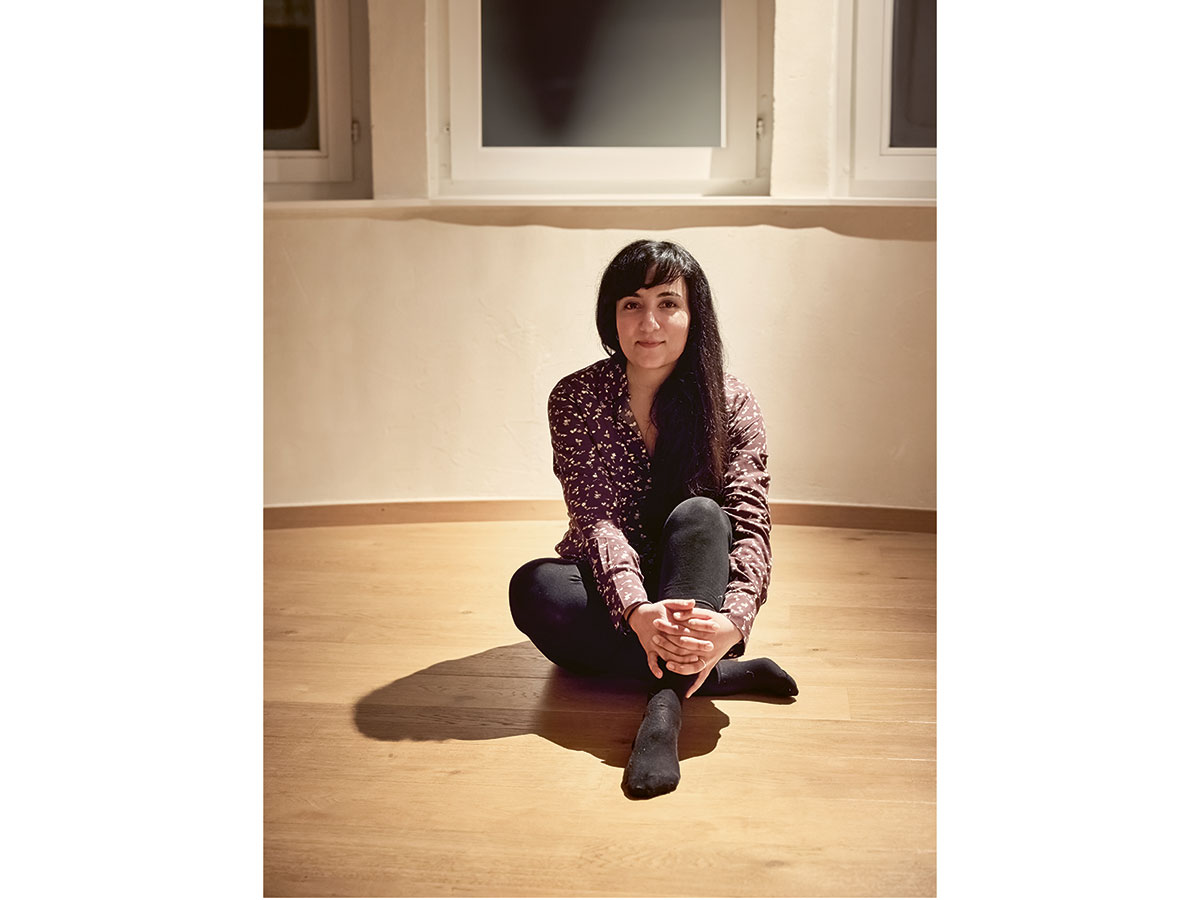
Farahmand is a postdoc in a team led by Oliver Krüger at the University of Fribourg. She’s been studying how spirituality is increasingly being embodied and bringing forth new forms of social behaviour.
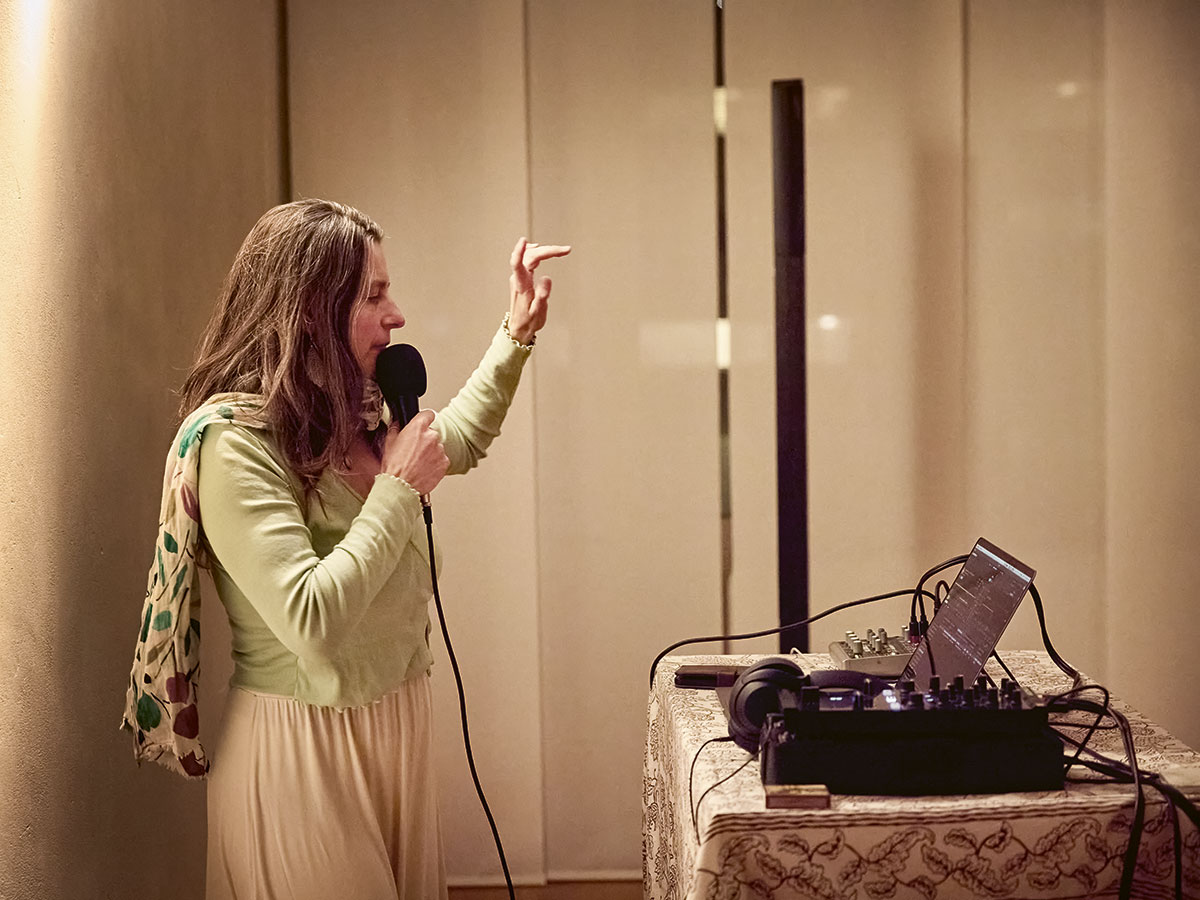
Tabea Serena is a psycho-body therapist who wants to create a space of freedom “where people feel safe and dare to be themselves”.
Some 20 people meet regularly in Vevey for their dancing ritual – for them, it’s a form of spirituality.
Farahmand analyses their symbolic function. In other words, what value and meaning are being collectively attributed to them. “Sessions often follow a form of wave”, she says. They open with a speaking circle, then the music starts slowly and gradually accelerates to a kind of paroxysm. The rhythm then slows down little by little, and the session ends with a moment of meditation. Although the structure is common, the style and aesthetics change according to the practice and the person leading the session.
This Monday evening in February, it is ‘conscious free dance’ with the facilitator and psycho-body therapist Tabea Serena. “It consists of moving without having direction, letting the body follow its desires”, she says, going on to describe how she’s inspired by the Celtic wheel for the ‘journeys’ she proposes.
Today, the trip revolves around the Imbolc ritual, which corresponds to Spring’s awakening of nature. “There’s a symbolism, a link with the season, which I suggest in the atmosphere and the music that passes through various rhythmic universes”, she says. “As a facilitator, I guide the journey and create a space of freedom where people feel safe and dare to be themselves”.
Indeed, they seem to have freed themselves from the fear of external gazes and social norms. Some shake, others frantically walk about the space, while one dancer remains seated, a shawl over her face. Many have their eyes closed or half closed, so as to “connect with themselves”.
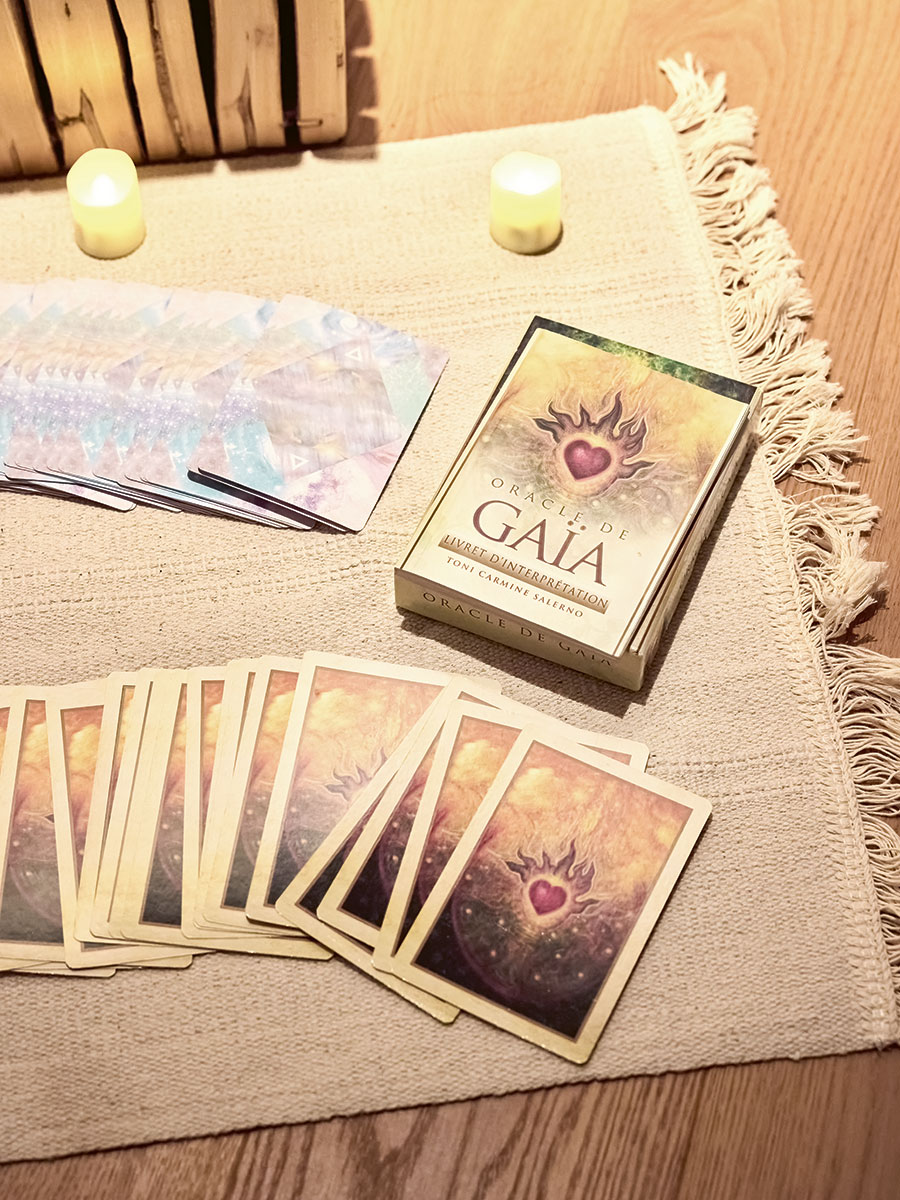
“Matter is present everywhere with a spiritual connotation”, says Manéli Farahmand, a socio-anthropologist. | Photos: Sébastien Agnetti
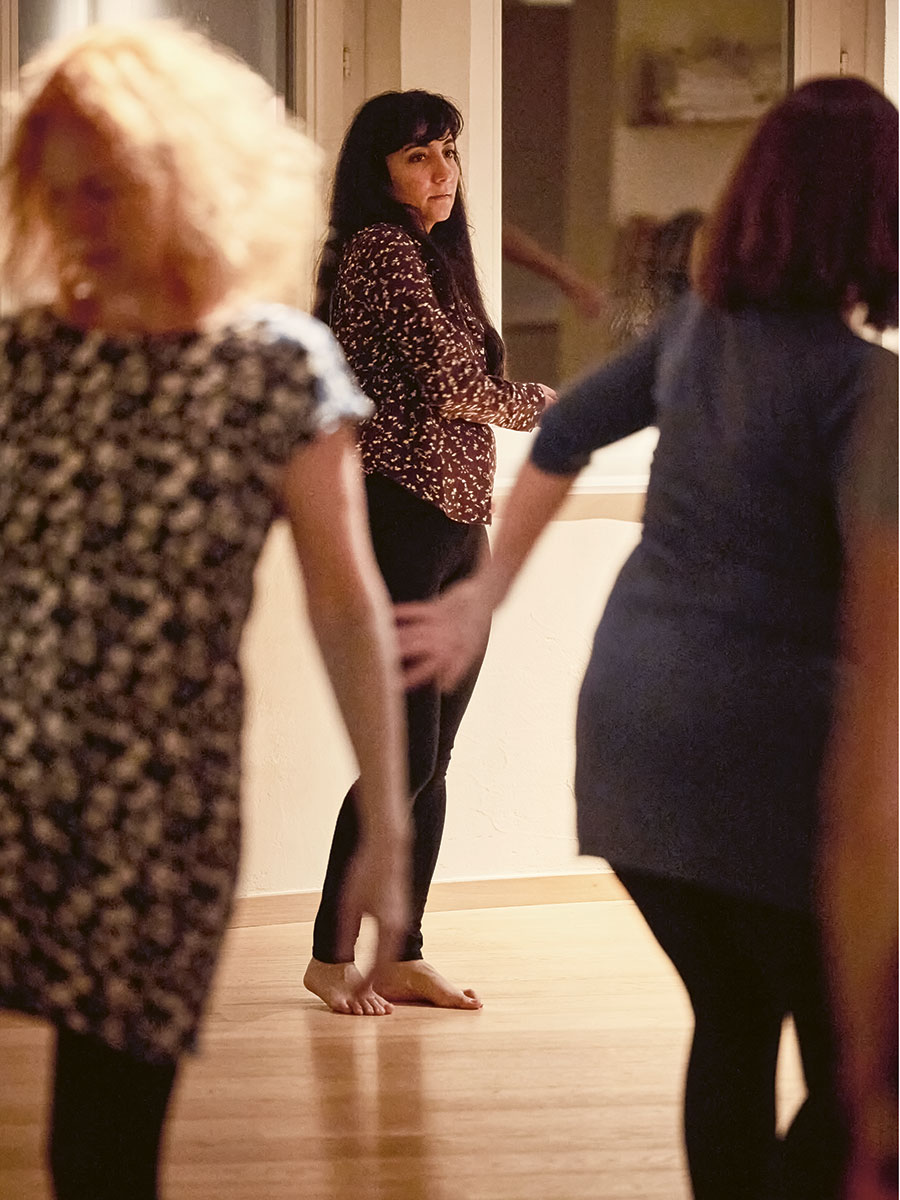
Farahmand, a postdoc, says she has “developed an observation method with a roaming gaze to capture what is happening without becoming fixated”.
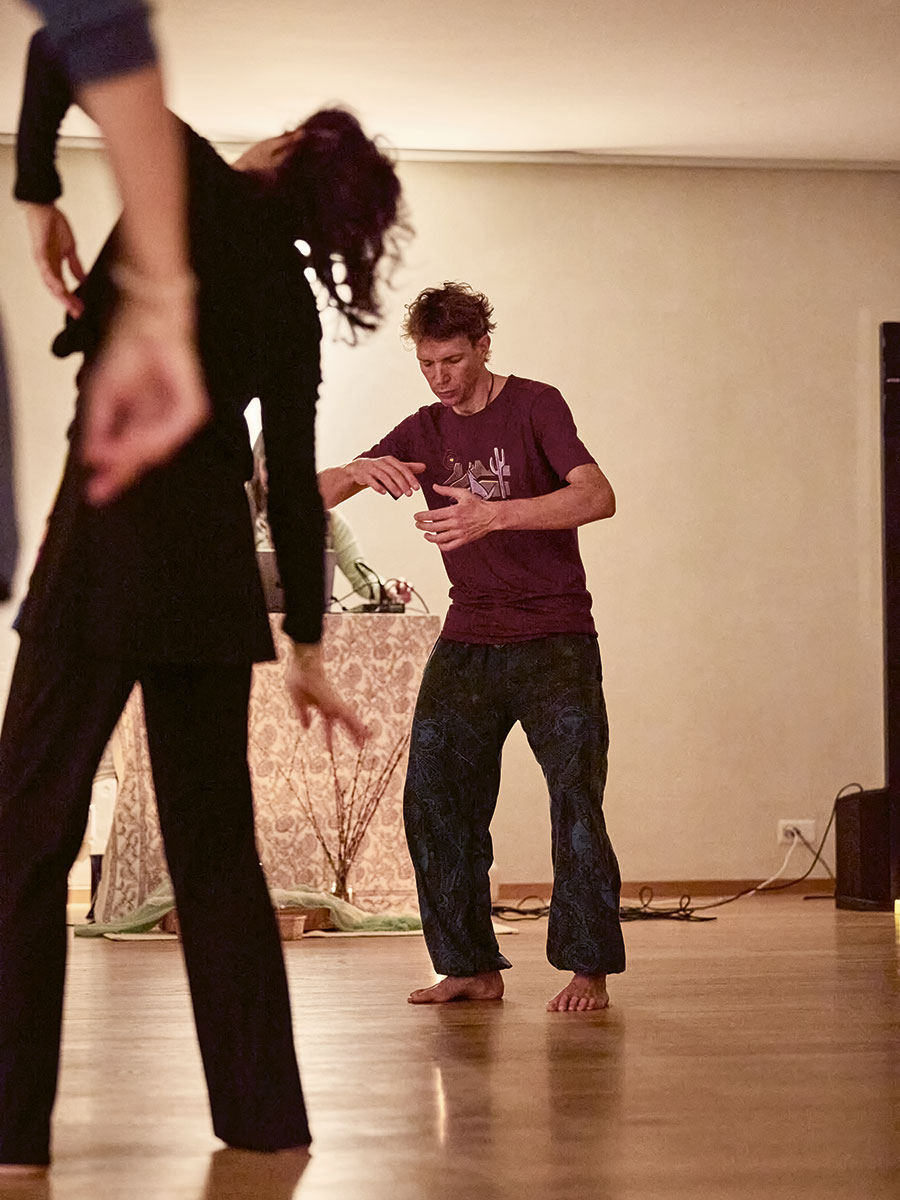
In social anthropology, researchers often engage in participant observation – which is a recognised research method.
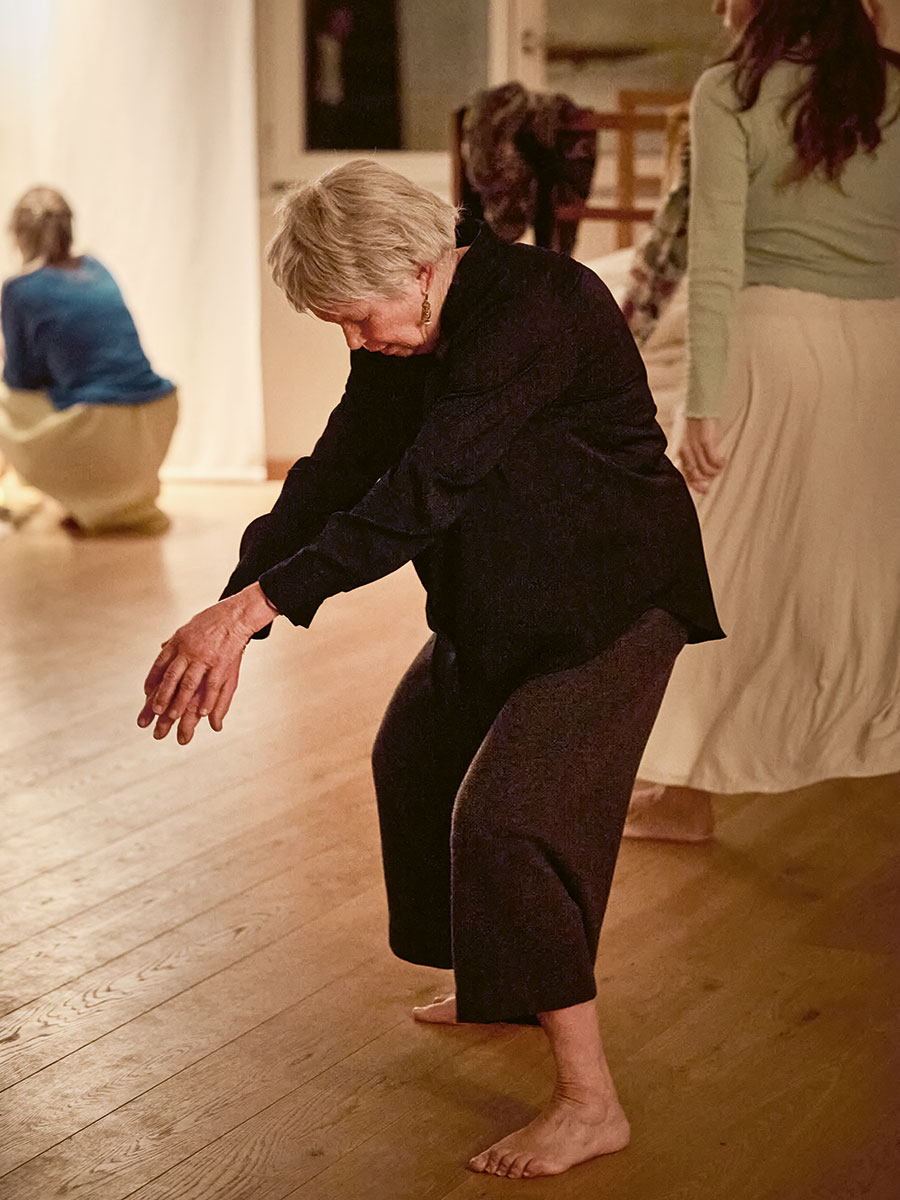
In conscious free dance, the body is allowed “to follow its desires”. Participants are often invited to let go of everything and connect to their feet, which are believed to have a life of their own.
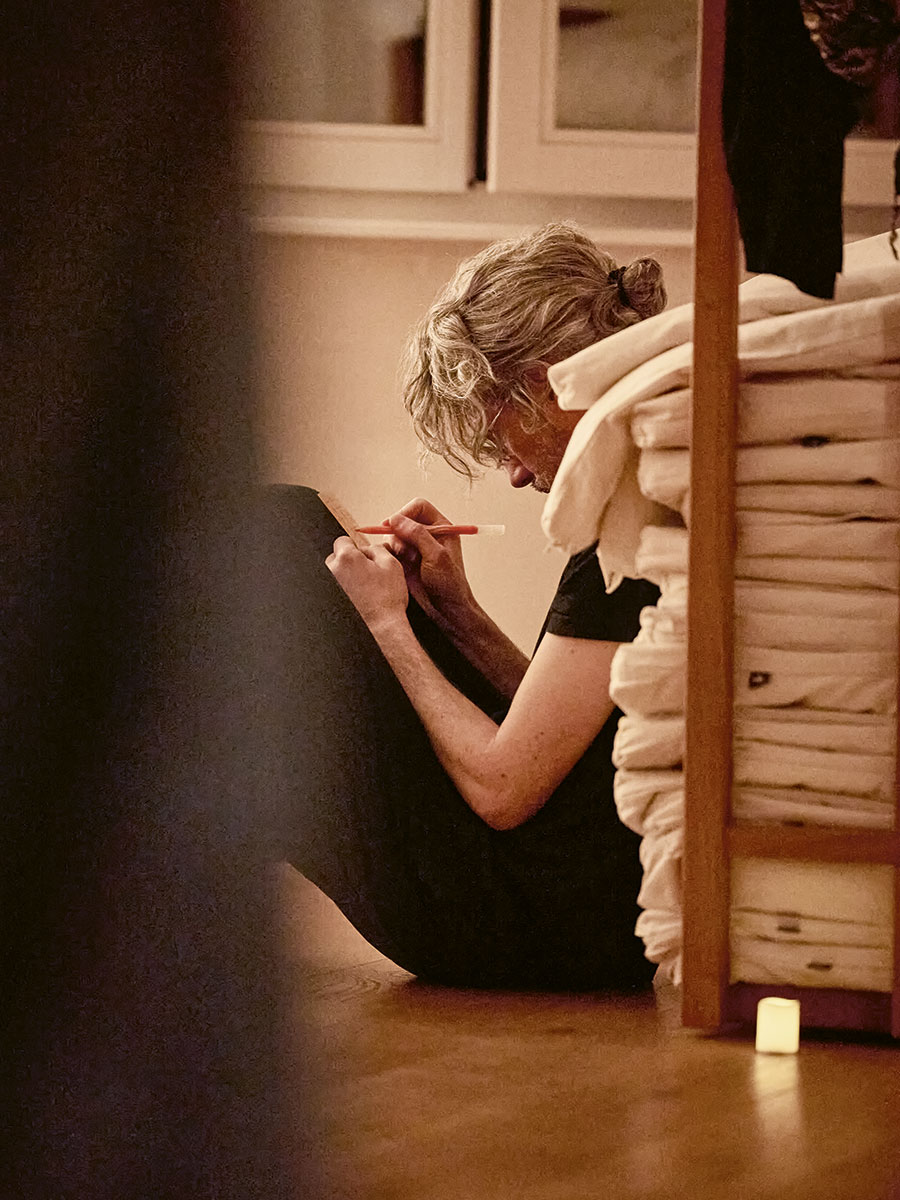
There are also stations where participants can write down their desires.
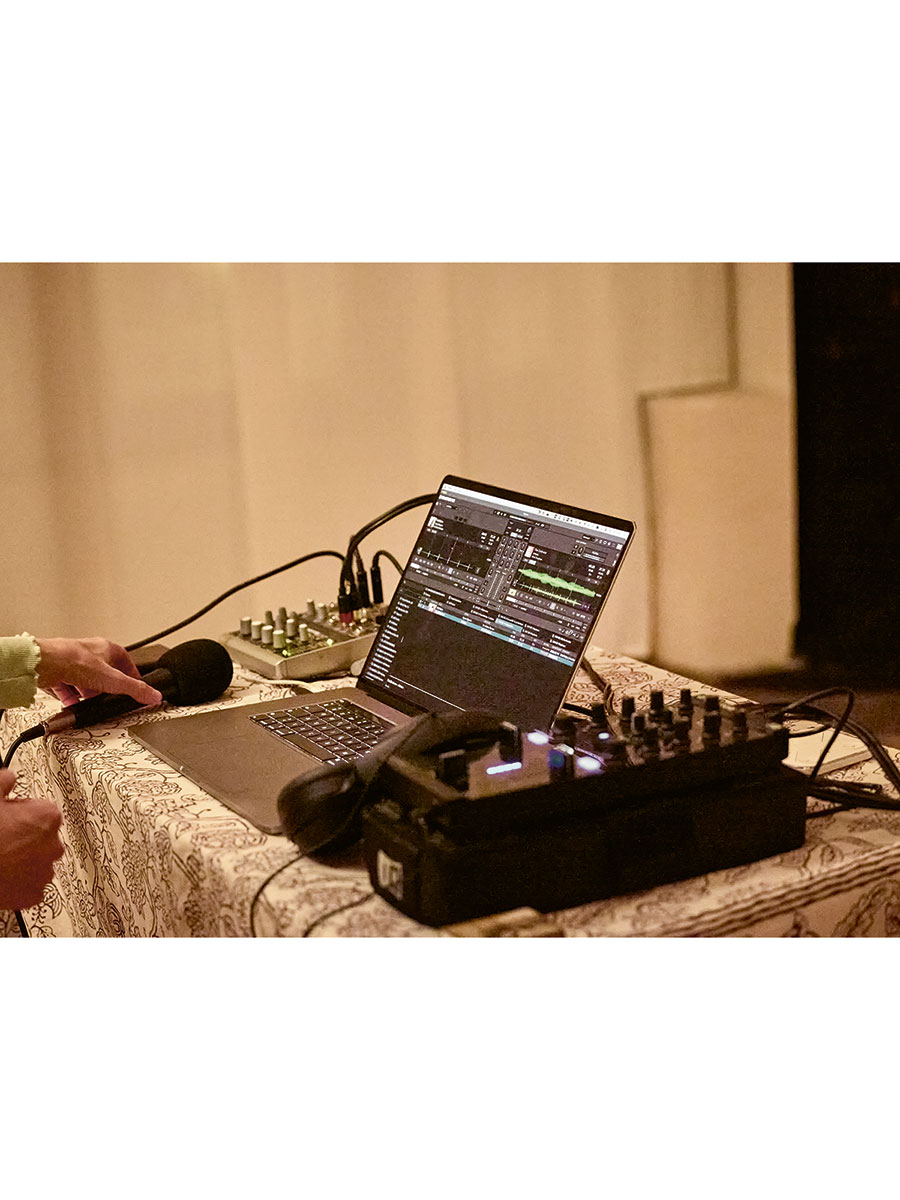
Tabea Serena leads the ritual and mixes the music live during the sessions so that she can “better adapt to the flow”. This time, she’s chosen gentle music to aid “gradual awakening”.
Alongside the dance space are three ‘stations’ where dancers can – in parallel – write their desires on cards, create their own purification ritual with water ‘loaded with the full moon and sunlight’, and deposit seeds or wooden pearls on an artisanal altar at the foot of the DJ table.
Farahmand says she was first surprised by the importance of matter – which includes our bodies – in ecstatic dances. “Matter is present everywhere with a spiritual connotation. We can clearly see that this isn’t a secular dance space. The body, like these objects, acts as a mediator with symbolic universes”.
The roaming look
Both the facilitators and the participants with whom Farahmand has spoken are informed of her research. She says she collects “often very enthusiastic” reactions. In fact, at the end of this session, several dancers spontaneously come to tell us about their experience. One says he participates to “clear his mind after work”, another appreciates the “therapeutic depth” while a third says it provides him with “medicine” and a “link to his own land”.
For Serena, the presence of a researcher is not a problem. “I know Manéli above all as a dancer of the group. She’s always had a respectful approach and that’s all we need as far as the participants are concerned”. The facilitator says she is “very happy” to welcome visitors. “We want people to see that it can be easy to be yourself” she says, smiling. However, she asks that everyone participate: be they researchers or journalists. Today, only the photographer is allowed to abstain.
Don’t lose yourself
The music is light and swift. Dancers – men and women alike – jump. Some dance in pairs. A young woman whirls like a dervish. Farahmand follows the rhythm, having created a framework for herself. “I rarely put myself at the centre of space, unless an exercise requires it or a participant takes me there. I would find it ethically unwelcome to be at the centre of the experience”, she says, going on to describe how she seeks to “fuse as much as possible into the assembly without losing herself”.
Farahmand is trained in participant observation and fully accepts that she cannot take notes in the moment. “I memorise the facilitator’s words, the layout of the space and the striking elements, then I write everything down at the end of the session or record a detailed voice message”. To work with the “necessary discretion and respect”, she says she has “developed an observation method with a roaming gaze to capture what is happening without becoming fixated”.
Dancing for research has never been a problem for Farahmand, as she has long practised modern jazz and contact improvisation. The challenge actually lay in “studying an environment where everyone moves, while also being in motion yourself”. She has also had to adapt. The sessions can last up to four hours in some settings, such as in the forest, and hence her senses can be put to the test.
Slight state of trance
“During a session where we were required to open our voices, participants shouted, so much so that I could no longer hear myself, it was difficult”, says Farahmand, who also confides having experienced “feelings of discomfort” during pair exercises and in certain groups.
“One time, when people seemed to know each other very well, there was a very strong clan effect with a lot of physical contact and people rolling on each other”, she says. “I felt constantly thrown out of myself, unable to enter the galvanised atmosphere”.
Conversely, some sessions lead her to experience “feelings of well-being”, or even to enter a “slight state of trance”. These sensations, both pleasant and unpleasant, push her to wonder about the place of the researcher’s body in science.
Critique of the performing body
Farahmand addresses some of her conclusions in a book, including a critique of the performing body model in ecstatic dances. These dances value a “lived and sensitive body” and form a “subculture centred on holistic health and vitality”, combining movement with liberation, purification and well-being.
In the room, the music gradually slows down. Participants lie on mattresses for a few minutes of meditation. Then Serena ends the two-and-a-half-hour session. “I invite you to return slowly to an awareness of what surrounds you”, she says in a whisper. Their eyes open again, and something subtle happens, perhaps a return to the ‘public self’ after a long immersion in the private one. Farahmand will set out her observations in her field books.