
The dangers of self-censorship
Right-wing populists, such as the Fidesz party in Hungary, are increasingly attacking scholars in the name of upholding research integrity. This is creating an atmosphere of uncertainty among researchers.
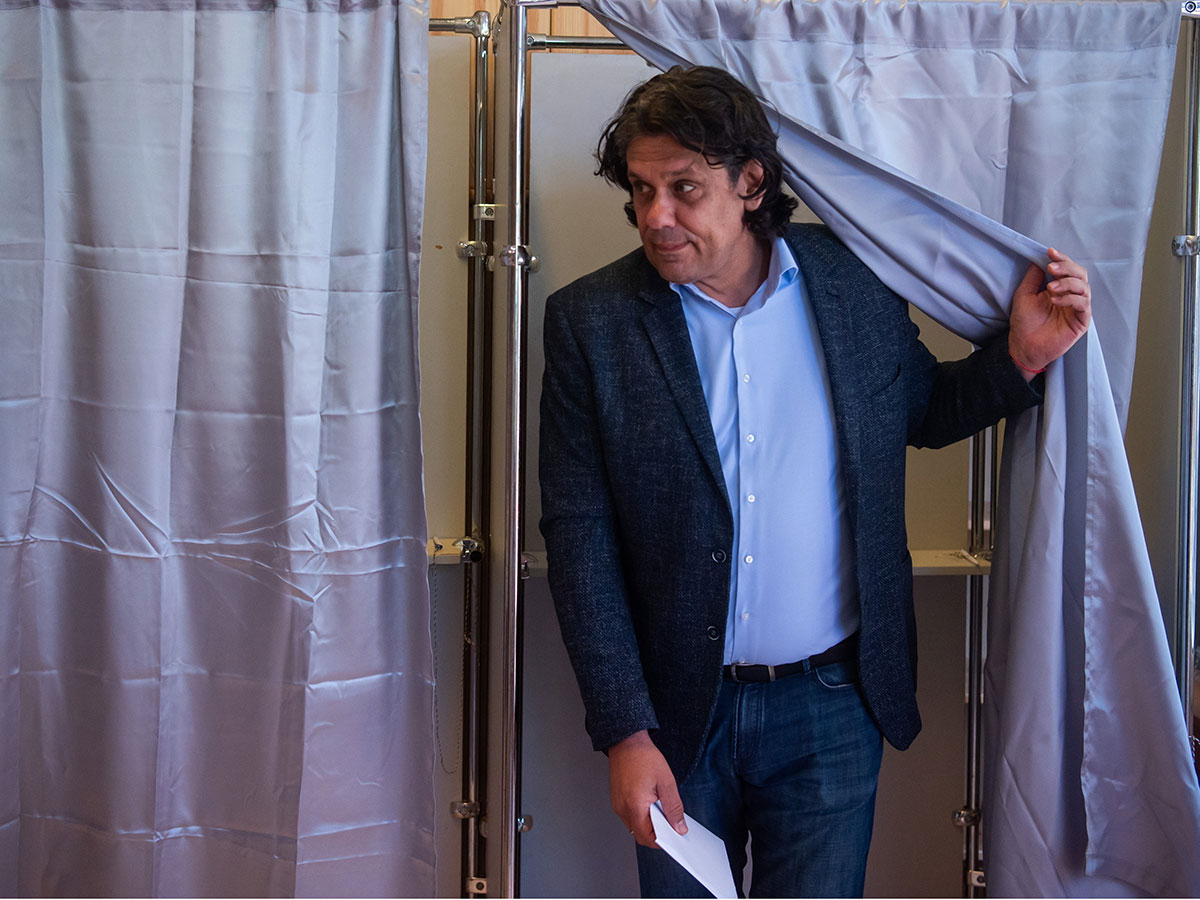
The right-wing populist party Fidesz, to which Tamás Deutsch belongs, governed Hungary for many years. The campaigns against research that Fidesz and similar parties elsewhere have instituted have had a demoralising impact on researchers in Europe. | Photo: Zoltan Balogh / EPA / keystone-sda
Tamás Deutsch is a Member of the European Parliament who belongs to Fidesz, the right-wing populist party, run by Viktor Orbán, that until May 2026 formed the government of Hungary. In February 2026, the online newspaper Science Business reported that Deutsch was demanding “the immediate discontinuation of programmes that contribute neither to technological sovereignty nor to scientific leadership, divert resources from technological progress and undermine the credibility of research in Europe”.
Deutsch also made specific reference to EU-funded programmes that he wanted abandoned, ranging from ‘Resist’, a self-styled “queer feminist intersectional resistance” organisation, to ‘You-Dare’, whose website describes it as devoted to “debunking the gendered arguments of far-right extremism”. Deutsch’s proposals for the EU’s upcoming multi-year budget are having success in exerting pressure. Funding agencies and researchers themselves could even begin to adjust their research priorities as a precautionary measure to avoid provoking an attack from the right.
This worries Jan Palmowski, the Secretary-General of the Association of Research-Intensive European Universities: “We can see in the US how quickly intimidation and funding policy shifts can lead to changes in behaviour”, he told Science Business. “We should beware of its beginnings in Europe”. He is supported in his views by Gabi Lombardo, the director of the European Alliance for Social Sciences and Humanities (EASSH).
Deutsch is promoting his demands under the banner of maintaining research integrity itself. He’s not alone in adopting such a tactic. Early this year, for example, the German weekly newspaper ‘Die Zeit’ wrote that “populists are deliberately exploiting the weaknesses of the scientific community”. It added that we can observe this pattern all over the world right now: “Those who’re attacking the autonomy of science and scholarship are disguising themselves as the defenders of scholarly rigour and academic freedom”. Let’s hope that researchers don’t start to self-censor themselves in hopes of avoiding problems.


