Feature: Start-ups in business heaven
Hi, spin-off guys! How’s it going?
Each issue of Horizons presents the technology of a different start-up. In most cases, the company in question is still in its infancy. We decided to check up on six of them to find out where they stand today.
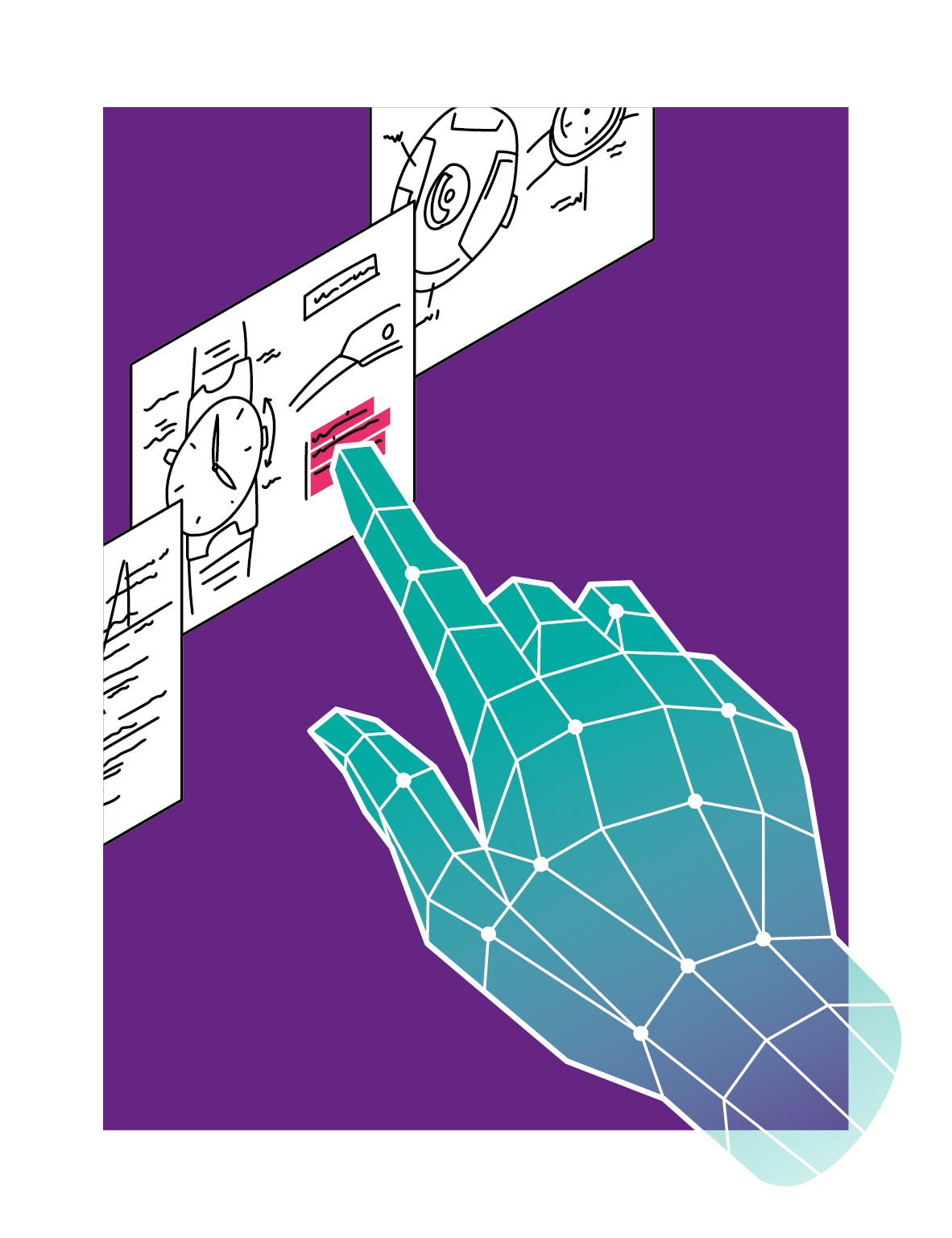
“In the IT industry, they say you should bet on a single product or you’ll fail. I like the fact that we don’t do that at Odoma”, says Giovanni Colavizza, one of the two founders of this spin-off that we presented in 2020. It uses AI to develop specific search engines for institutions such as museums and libraries. His co-founder Laurent Bolli is of the same opinion: “We only accept orders for problems that have no commercial solution”. They are both still active researchers at universities, and each only has a 30-percent post at Odoma. But their goal, says Colavizza, is to turn these into full-time positions. The year 2023 was the best in the history of their company; it had never before generated so much revenue. The company has been in existence since 2017, staffed just by its two founders, but it’s slowly becoming necessary to expand into a small team. Even after seven years, Odoma is still in the early stage of a start-up company, but that’s also what its founders wanted. Bolli used to run a company of his own with 25 employees and he knows how much of a burden that can be. So he decided he wanted to expand Odoma cautiously. Colavizza would be happy for things to go a bit quicker, but he also believes that “it’s important to keep a good balance and simply enjoy the experience”.
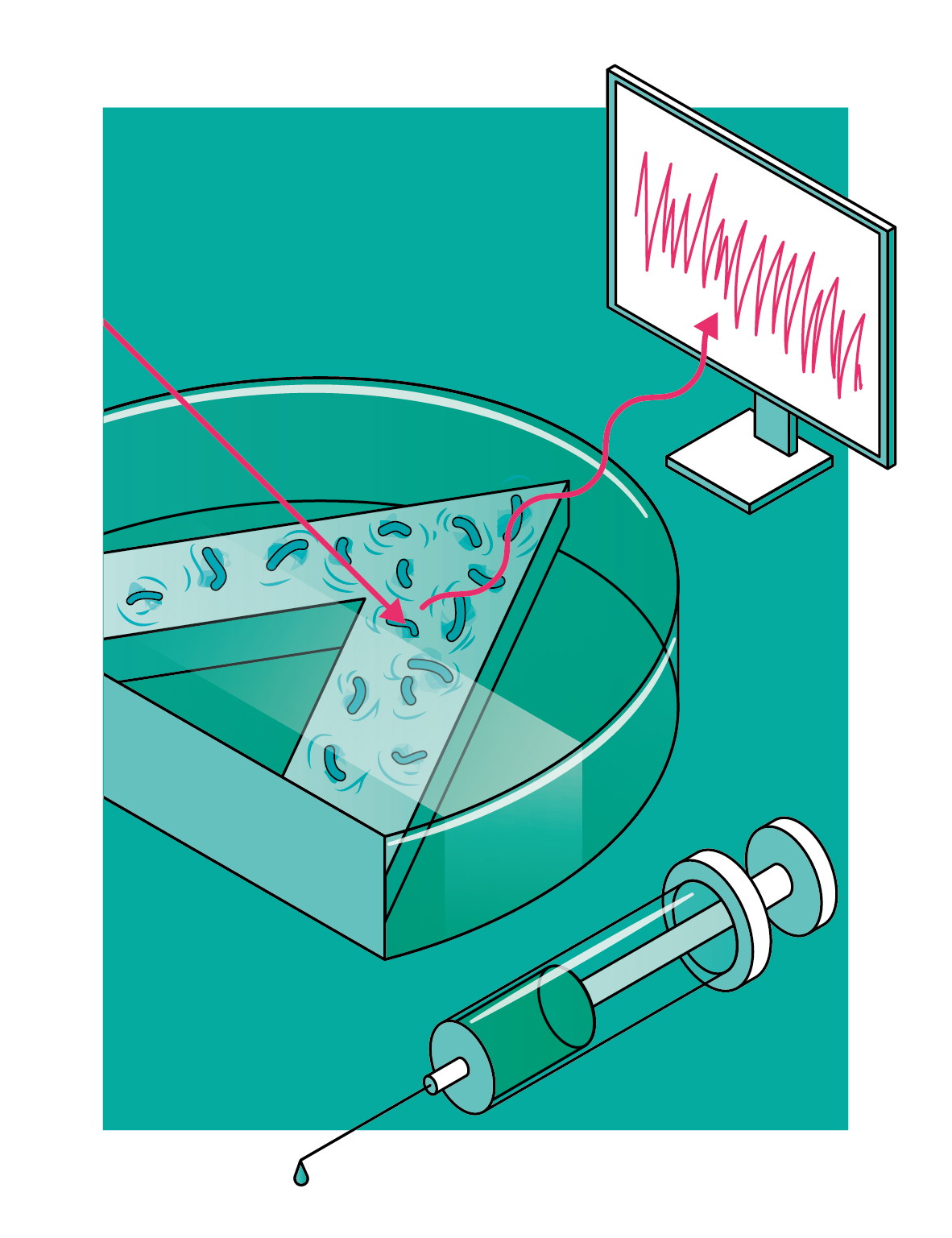
“This damn pandemic!” Grzegorz Gonciarz was the operational manager at Resistell right from the start, and he remembers how lockdowns and overflowing hospitals hit them for six in 2020. “We received approval from the ethics committee for our clinical trials in 2019”. But then corona struck. Resistell’s tests can detect antibiotic resistance quickly, but they were being analysed by the same laboratories that were made responsible for Covid tests. So hospital staff interrupted Resistell’s study in order to manage the treatment of Covid patients at the Lausanne University Hospital (CHUV). Horizons first presented Resistell in late 2019. It’s managed to survive the crisis, and is now playing catch-up. It has some 30 employees, 50 of its devices are in use, and they are running two current clinical trials on sepsis with a total of over 450 patients. During the pandemic, the Resistell team was able to focus on obtaining funding and ISO certification, both of which are crucial for the further field tests that they’re planning for sepsis, urinary tract infections and tuberculosis. “Most of our employees are researchers”, says Gonciarz, “and they want to solve scientific problems. If they can save human lives in the process, it’s all the better”.
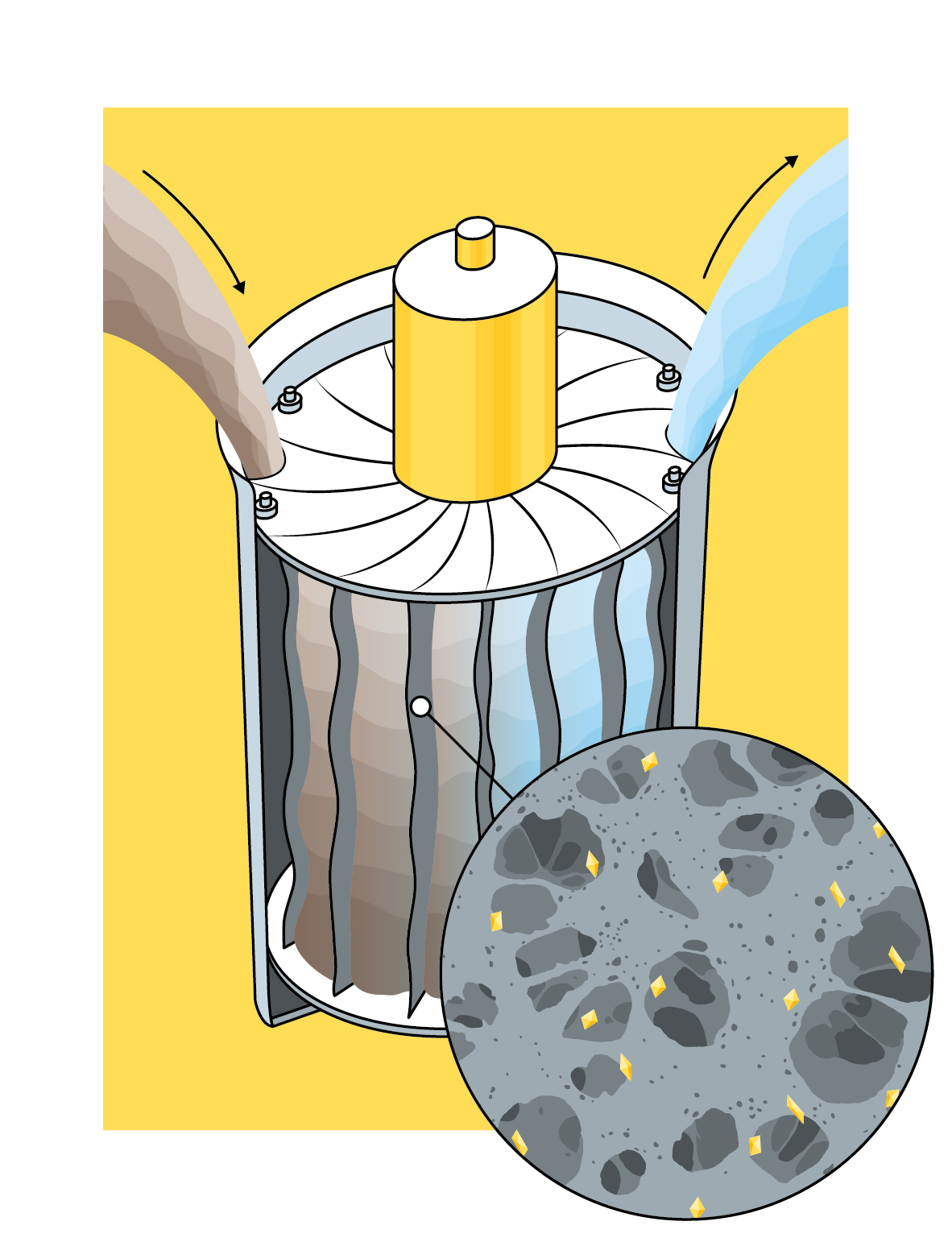
“We’re over the painful phase” says Fajer Mushtaq, the co-founder of the spin-off Oxyle. She’s talking about the time last year when she had to reorganise her team of some 20 people, dividing it into a product team, an operations team and a sales team. “Not everyone likes change, but it had to be done. You always have to keep the big picture in mind”. Oxyle was founded in 2020 and featured in Horizons in 2021. It has developed a filter for water purification that’s made of nanoporous material. Following an industrial pilot test in 2023, it’s now reached the stage where it can undergo full testing at a chemical company. Silvan Staufert is a co-founder, and he’s delighted both that they’ve reached this milestone and that their clients’ response is so positive. “They don’t normally like to talk about pollutants, but now that there’s a solution, they do”. Oxyle initially focussed on eliminating pharmaceuticals and pesticides, but it’s now grappling with the so-called ‘forever chemicals’ (per- and polyfluorinated alkyl substances, ‘PFAS’ for short). Doing something for the benefit of people and the environment is their main motivation, says Mushtaq: “We love our mission. Working in start-ups isn’t easy, but our belief in its purpose makes the effort worthwhile”.
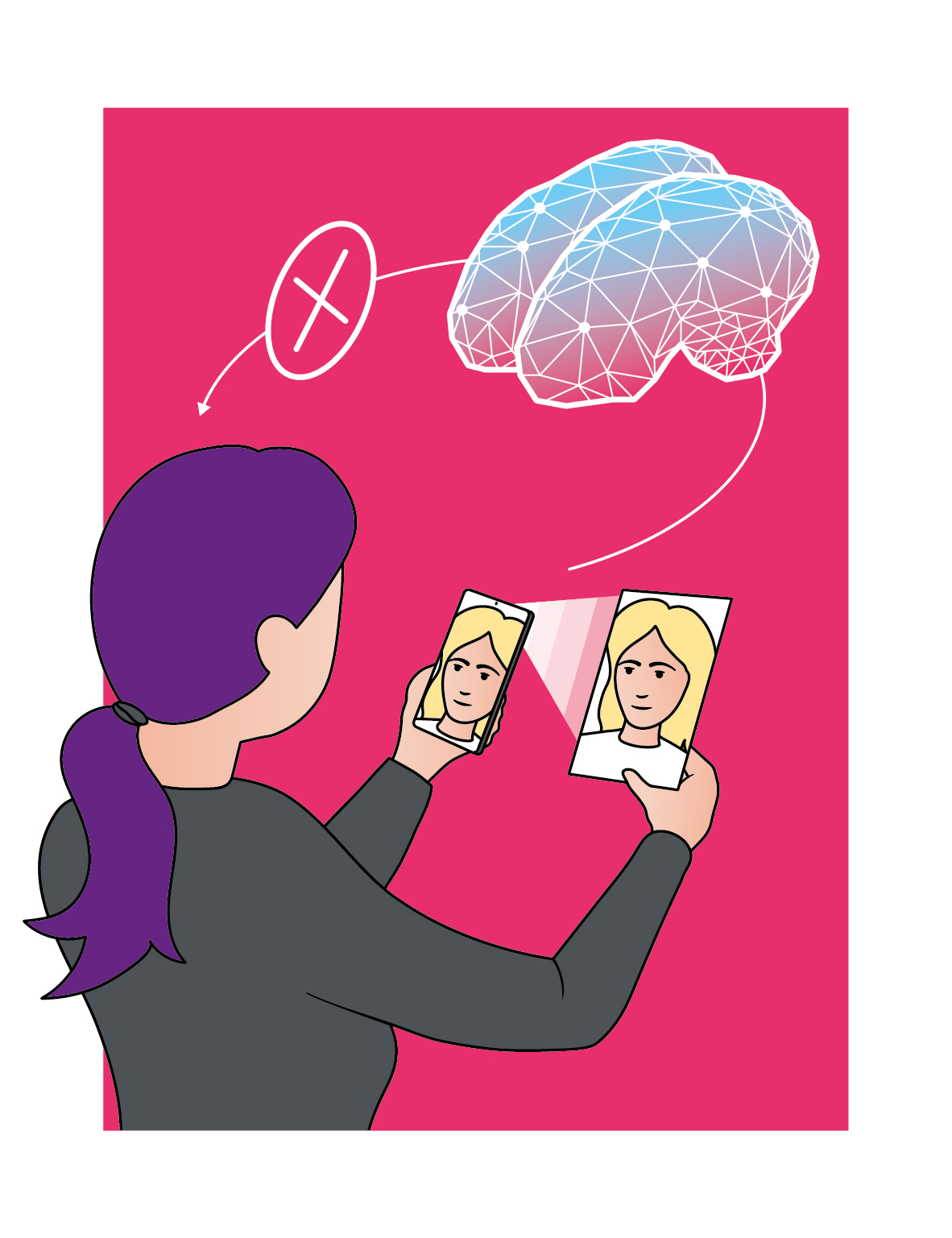
“Today, a lot happens in this company without my being in any way involved. That means we’re on the right track”. Karim Nemr is the co-founder of PXL Vision. He’s convinced that, when the time comes that he can be replaced by someone else, the transformation of his spin-off company into something more stable will have been completed. In the past seven years, PXL Vision has grown from having just four employees to employing 50, and from having a handful of clients, including Swiss ID and telecommunications companies, to catering for all kinds of sectors e.g., insurance, financial services and online marketplaces. PXL Vision specialises in digital identity verification, with a special emphasis on effective fraud detection – and it’s now built up a sizeable database of known fraudsters. There are sheer endless fields in which this technology is needed today – such as age verification. Nemr has also experienced difficult times since we presented his company in Horizons back in 2020. But the potential dangers of very rapid growth have been avoided, and he has a tip for other start-ups that are entering that acute phase: “Don’t forget your existing clients! When you’re a small company embarking on new growth initiatives, you often underestimate the potential of your existing base”.

“I’ve got no problems handing over my baby. It’s nice that things are continuing”, says Veronika Brezinka now that she can look back with satisfaction on the development of her project over the past 16 years. At the start, with a budget of just CHF 25,000 and the help of eight volunteers, she developed the computer game ‘Treasure Hunt’ for use in children’s psychotherapy. In 2012, she followed this up with ‘Ricky and the Spider’ for treating obsessive-compulsive disorders (OCD). She wanted to inspire young researchers to develop scientifically sound games for therapeutic purposes. “I was disappointed when it didn’t happen”. Her products endured as the only ones of their kind on the international scene, and have been downloaded repeatedly by professionals. That was also the situation back in 2021 when we presented her project in Horizons. Brezinka has since retired. Ironically, it’s only now that the biggest German publisher in the field of psychology has decided that it wants to produce these games again, and so it has bought the licence from the University of Zurich. Brezinka will only receive one percent of the sales revenue, but that doesn’t bother her: “Money was never my motivation”, she says. “I wanted to motivate boys during psychotherapy, and I wanted to support psychotherapists who are often afraid to treat OCD”.

“We’d like to democratise access to space”, said the spokesperson of Swiss Space Systems on the Space News platform in January 2015. He was talking about the mission at the heart of this start-up. They were literally aiming for the stars – their goal was to develop a spacecraft capable of launching small satellites into orbit – and they once had no less than 70 employees. The media coverage of the company was initially very positive, with Horizons offering more neutral coverage in 2015. The company’s subsequent crash can serve as an indication of both how diverse the opportunities can be in the world of start-ups, and also how great the pressures can become. Or perhaps it was all just a scam anyway. Its founder was injured in an arson attack on his car in the summer of 2016, the precise nature of which remains unclear today. Doubts have also been raised about the authenticity of a bank guarantee. He himself claimed that the space business was highly competitive. But his company was declared bankrupt in late 2016. The Fribourg Office of Justice later opened criminal proceedings against him on suspicion that he had instigated the fire himself. He is presumed innocent until proven guilty, but it has been impossible to locate him to comment on this article.
Illustrations: Ikonaut