Tracking pollen with 3D images
MeteoSwiss has a national network of automated sensors capable of measuring pollen and other aerosols in real time, making it the world leader in the field. The data collected are highly useful in the prevention of allergies.
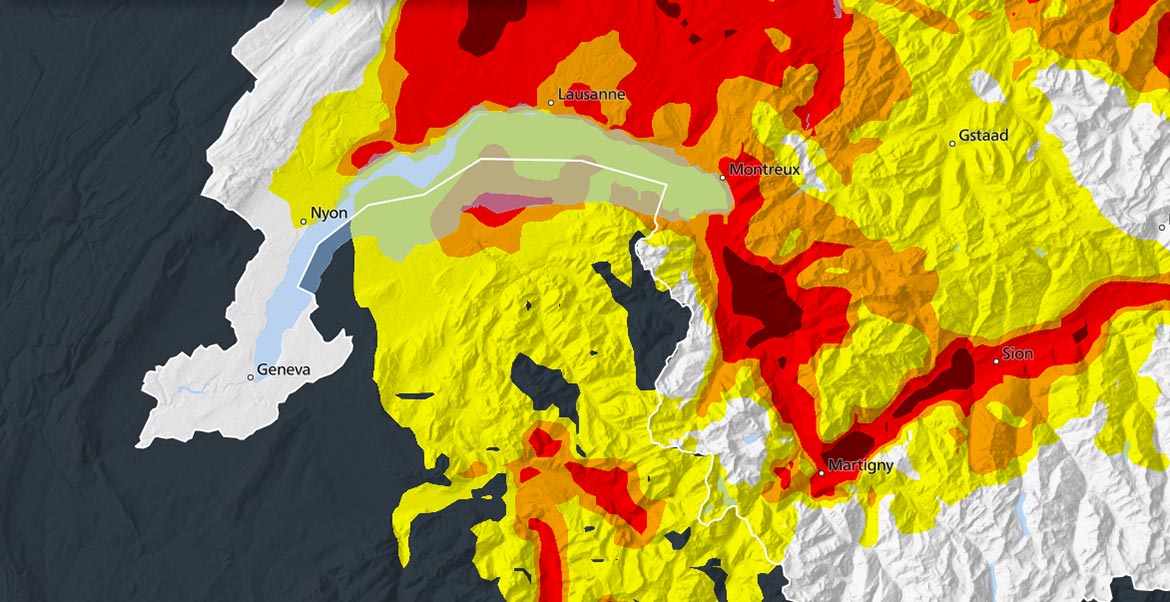
Just like with the weather, pollen forecasts are becoming ever more precise. | Graphic: Meteo Suisse.
In the 1960s, some large hospitals began operating pollen sensors on their roofs. Since January 2023, the old sensors – whose measurements were collected manually – have been replaced under the initiative of MeteoSwiss’s biometeorology group and EPFL’s Environmental Remote Sensing Lab. The new equipment boasts two holographic cameras – enabling the creation of 3D images – and artificial intelligence, used to identify a series of volatile particles of sizes between five and 150 micrometres.
In total, 15 stations are equipped with the Swisens Poleno sensors, covering the main agglomerations in Switzerland and forming a single uniform network. “For each station, we can determine the type of each grain of pollen and the time it was identified”, says Sophie Erb, a doctoral fellow heading up the project. She says that no other country in the world has such a pollen-measuring network. “The movement of pollen, and also other allergens, for example fungal spores, can also be tracked in real time, automatically and with much greater precision than previously”.
This data is compiled and published by MeteoSwiss and is of great value to public health. Allergy sufferers – 20 percent of the Swiss population – can now adapt their movements according to the pollen forecast. Furthermore, the network’s measurements also make it possible to investigate the combined impact of such particles and shed light on their interactions with other weather events, e.g., thunderstorms.
Scientists have, for example, observed peaks in pollen around 20 minutes prior to storms. They hope to be able to predict pollen concentrations using a set of weather variables, e.g., high pressure, temperature drops, or even the wind picking up. “It’s as if we were putting together all the pieces of a huge jigsaw puzzle”, says Erb enthusiastically.