
Is the prefix ‘post-’ meaningful in scholarship?
Does the prefix ‘post-’ keep us fixated on the past? Or does it in fact help us to pose critical questions, thereby promoting new perspectives? We consider two conflicting opinions.
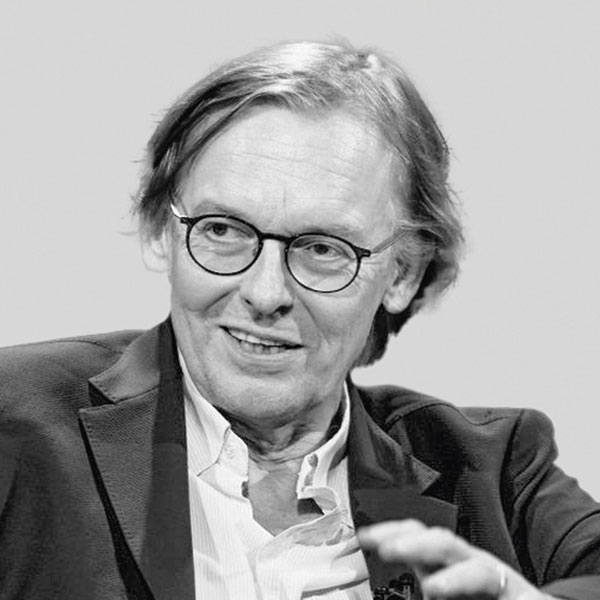
Photo: provided by subject

Photo: provided by subject
The prefix ‘post-’ is the most popular invention of the humanities and social sciences since 1945. But it’s also caused a lot of damage. Anyone who’s content to describe a situation by merely decorating a grand old word with the prefix ‘post-’ inevitably remains fixated on the past and thereby runs the risk of underestimating the appeal of the new. If the revolutionaries in Paris in 1789 had uttered “Long live post-feudalism!” as their battle cry instead of “Long live the republic!”, it’s unlikely that anyone would have got excited about it. And yet the more recent success of post-isms continues unabated. They range from post-history to postmodernism to postcolonialism, and they’re joined by post-democracy, post-liberalism and post-feminism. But all these post-isms have one main problem: they’re stuck in an ambivalent state, between an attachment to what came before and a sense of dissociation from it.
We can illustrate this indecision by using postcolonialism as an example. On the one hand, as the Palestinian-American literary scholar Edward Said has explained, it conveys the message that the current situation in the Global South has been determined by colonialism. On the other hand, the historian Robert Young argues that postcolonialism has the potential to ‘triumph’ over colonialism. Either way, the burden of the past that is associated with the prefix ‘post-’ makes it more difficult to engage in an independent analysis of current possibilities for action – what the French philosopher Michel Foucault called the ‘ontology of the present’. This is probably why Foucault had no time at all for the term ‘postmodernism’, and why the Cameroonian historian Achille Mbembe insists that he “doesn’t belong to the postcolonial school”.
It seems many people assume that the invention of a post-ism is in itself an intellectual achievement. But in fact, it functions more as a substitute for thinking – as a label that often conceals muddled reasoning. Incidentally, post-isms are criticised today by all political camps, not just by the right. There’s also been strong criticism from the left, such as from the Swiss theatre director Milo Rau.
Dieter Thomä is an emeritus professor of philosophy at the University of St. Gallen. His most recent book, ‘Post-. Nachruf auf eine Vorsilbe’, was published in 2025.
Absolutely. The prefix ‘post-’ is not merely a gesture toward the past, but a critical tool that reshapes how we understand the present. Critics argue that post-theories remain entangled with what they seek to overcome – but this tension is their strength.
Take postcolonialism – it does not claim that colonialism is over, but shows how its structures endure. The Colombian anthropologist Arturo Escobar argues that development itself became a project through which the Global North continued to manage the Global South. An example of this conceptualisation is the resettlement policy in the Narmada Valley Dam project in mid-west India, which was initially funded by the World Bank, then taken over by the Indian government. Though framed as development, it displaced indigenous communities without adequate consent or compensation.
Similarly, poststructuralism does not deny structure; it asks who built the structure and who it excludes. The analysis of the prison system by the French philosopher Michel Foucault in one of his most influential works, ‘Discipline and Punish’, reveals how institutions like schools, hospitals and prisons shape subjectivities by normalising certain behaviours and punishing deviation.
My own research on India’s anti-sexual harassment policies indicates how they exclude oppressed-caste, queer and informal sector workers. Poststructuralist analysis helps reveal how these policies, while appearing progressive, reinscribe caste neglect and heteronormativity under the guise of reform.
Returning to the broader role of the prefix ‘post-’, it doesn’t just mean ‘after’. It asks how we might move away from the dominant ways of structuring the world. Contrary to what some critics argue, post-theories do not follow older systems: they interrogate, unsettle and reframe them. In doing so, they enable research that is effective, plural and accountable.
In a world fractured by inequality, climate collapse and colonial residues, ‘post-’ is not a retreat but a refusal to simplify. Rather than abandoning the prefix ‘post-’, we should ask: what is it trying to unsettle, and why does that act of unsettling still matter? ‘Post-’ is not only meaningful, but necessary.
Anukriti Dixit is a postdoc in the social sciences at the University of Bern. She specialises in poststructuralist, anti-caste and decolonial research.
Photo: provided by subject
The prefix ‘post-’ is the most popular invention of the humanities and social sciences since 1945. But it’s also caused a lot of damage. Anyone who’s content to describe a situation by merely decorating a grand old word with the prefix ‘post-’ inevitably remains fixated on the past and thereby runs the risk of underestimating the appeal of the new. If the revolutionaries in Paris in 1789 had uttered “Long live post-feudalism!” as their battle cry instead of “Long live the republic!”, it’s unlikely that anyone would have got excited about it. And yet the more recent success of post-isms continues unabated. They range from post-history to postmodernism to postcolonialism, and they’re joined by post-democracy, post-liberalism and post-feminism. But all these post-isms have one main problem: they’re stuck in an ambivalent state, between an attachment to what came before and a sense of dissociation from it.
We can illustrate this indecision by using postcolonialism as an example. On the one hand, as the Palestinian-American literary scholar Edward Said has explained, it conveys the message that the current situation in the Global South has been determined by colonialism. On the other hand, the historian Robert Young argues that postcolonialism has the potential to ‘triumph’ over colonialism. Either way, the burden of the past that is associated with the prefix ‘post-’ makes it more difficult to engage in an independent analysis of current possibilities for action – what the French philosopher Michel Foucault called the ‘ontology of the present’. This is probably why Foucault had no time at all for the term ‘postmodernism’, and why the Cameroonian historian Achille Mbembe insists that he “doesn’t belong to the postcolonial school”. It seems many people assume that the invention of a post-ism is in itself an intellectual achievement. But in fact, it functions more as a substitute for thinking – as a label that often conceals muddled reasoning. Incidentally, post-isms are criticised today by all political camps, not just by the right. There’s also been strong criticism from the left, such as from the Swiss theatre director Milo Rau.
Dieter Thomä is an emeritus professor of philosophy at the University of St. Gallen. His most recent book, ‘Post-. Nachruf auf eine Vorsilbe’ was published in 2025.
Photo: provided by subject
Absolutely. The prefix ‘post-’ is not merely a gesture toward the past, but a critical tool that reshapes how we understand the present. Critics argue that post-theories remain entangled with what they seek to overcome – but this tension is their strength.
Take postcolonialism – it does not claim that colonialism is over, but shows how its structures endure. The Colombian anthropologist Arturo Escobar argues that development itself became a project through which the Global North continued to manage the Global South. An example of this conceptualisation is the resettlement policy in the Narmada Valley Dam project in mid-west India, which was initially funded by the World Bank, then taken over by the Indian government. Though framed as development, it displaced indigenous communities without adequate consent or compensation.
Similarly, poststructuralism does not deny structure; it asks who built the structure and who it excludes. The analysis of the prison system by the French philosopher Michel Foucault in one of his most influential works, ‘Discipline and Punish’, reveals how institutions like schools, hospitals and prisons shape subjectivities by normalising certain behaviours and punishing deviation.
My own research on India’s anti-sexual harassment policies indicates how they exclude oppressed-caste, queer and informal sector workers. Poststructuralist analysis helps reveal how these policies, while appearing progressive, reinscribe caste neglect and heteronormativity under the guise of reform.
Returning to the broader role of the prefix ‘post-’, it doesn’t just mean ‘after’. It asks how we might move away from the dominant ways of structuring the world. Contrary to what some critics argue, post-theories do not follow older systems: they interrogate, unsettle and reframe them. In doing so, they enable research that is effective, plural and accountable. In a world fractured by inequality, climate collapse and colonial residues, ‘post-’ is not a retreat but a refusal to simplify. Rather than abandoning the prefix ‘post-’, we should ask: what is it trying to unsettle, and why does that act of unsettling still matter? ‘Post-’ is not only meaningful, but necessary.
Anukriti Dixit is a postdoc in the social sciences at the University of Bern. She specialises in poststructuralist, anti-caste and decolonial research.