
A chameleon’s skin changes with its sleep cycle
Brain oscillations during sleep could serve to protect animals from surprise attacks by predators.
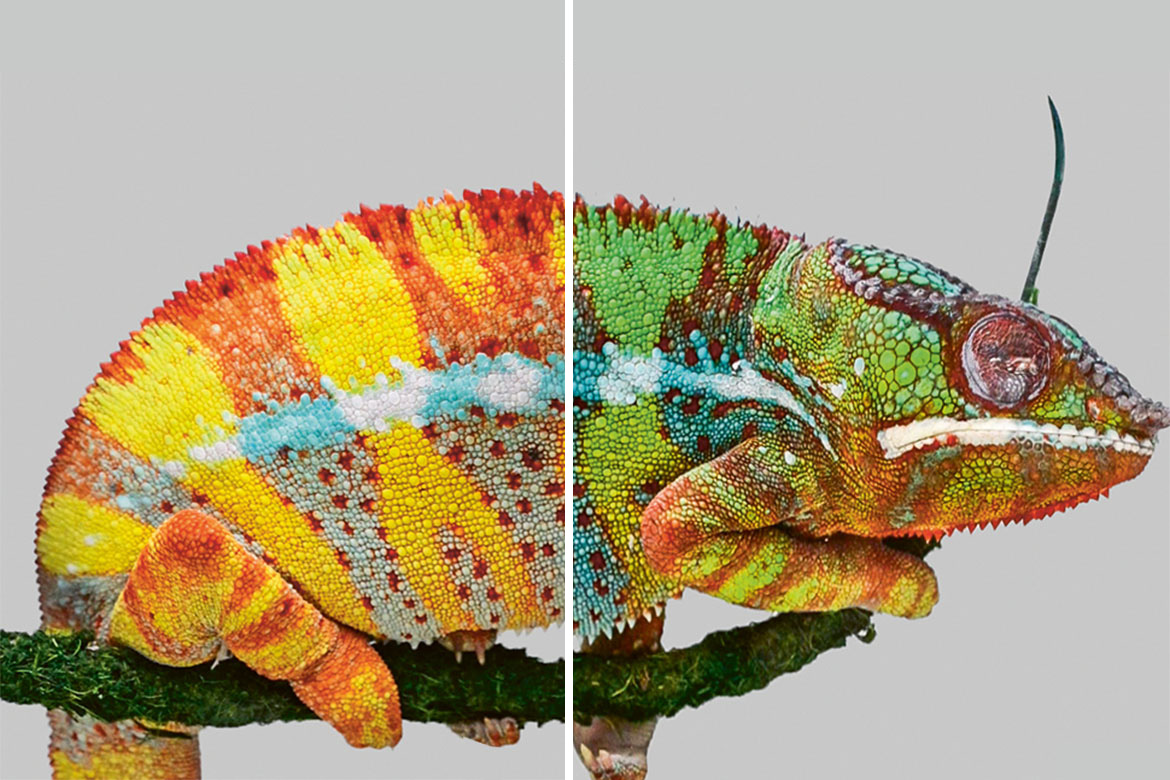
The brightness of a chamelon’s skin changes during sleep, in sync with its brain oscillations. | Photo: Nature Neuroscience (2025)
Sleep still holds many secrets. But an international research team has recently shown that a key rhythm of our sleep is significantly older than previously believed. They recorded brain activity in people, rats, pigeons and seven species of lizard – including geckos, iguanas and panther chameleons. They found that all these species go through sleep phases in which their brain activity oscillates in extremely slow cycles.
The intervals of these so-called ‘infraslow’ rhythms range from roughly 50 seconds to two minutes and are closely linked to bodily functions such as eye movements, muscle tone, heart rate and breathing rate.
This link is especially striking in the case of chameleons, because the brightness of their skin changes during sleep, in sync with their brain oscillations. “We suspect that these sleep cycles cause fluctuations in the oxygen content of the blood vessels in a chameleon’s skin”, says Markus Schmidt, a sleep researcher at Inselspital Bern, who was involved in the study. “Depending on their oxygen content, specialised skin cells – the chromatophores – reflect light differently”.
Infraslow rhythms occur during non-REM sleep – a phase that is associated with low brain activity. But their actual function isn’t yet understood. One hypothesis is that these brief active phases help animals to avoid being caught off-guard by predators while they sleep. “During phases of higher brain activity, their sleep is less deep – which might allow an animal to be more aware of its surroundings”, says Schmidt.


