Democratic participation doesn’t always promote equality
Even democratic decisions can be exclusionary and give a greater say to those with more money. We consider where the system’s limitations lie.

Flatmates have diverse interests and talents. So things can get pretty chaotic around the kitchen table, and not everyone is able to make themselves heard. | Illustration: Simon Landrein
It’s only been 36 years since women in the canton of Appenzell Inner-Rhodes finally got the right to vote. The ‘Landsgemeinde’ – the annual, previously men-only democratic gathering of the citizens of the canton – had repeatedly rejected proposals for women to vote on cantonal issues. At the heart of this long-standing, successful opposition to women’s suffrage was patriarchal logic. Until well into the 20th century, politics was regarded as a male domain. In fact, everything to do with the state was long regarded this way.
2
Swiss cantons
allow foreign nationals to vote in elections and referenda. In the canton of Neuchâtel, this right was introduced in 2000 and applies to those with permanent residence (a ‘C’ permit) who have lived in the canton for at least five years. In the canton of Jura, foreigners have been allowed to vote since the canton was created back in 1979, as long as they have been resident in Switzerland for 10 years and in the canton itself for at least one year.
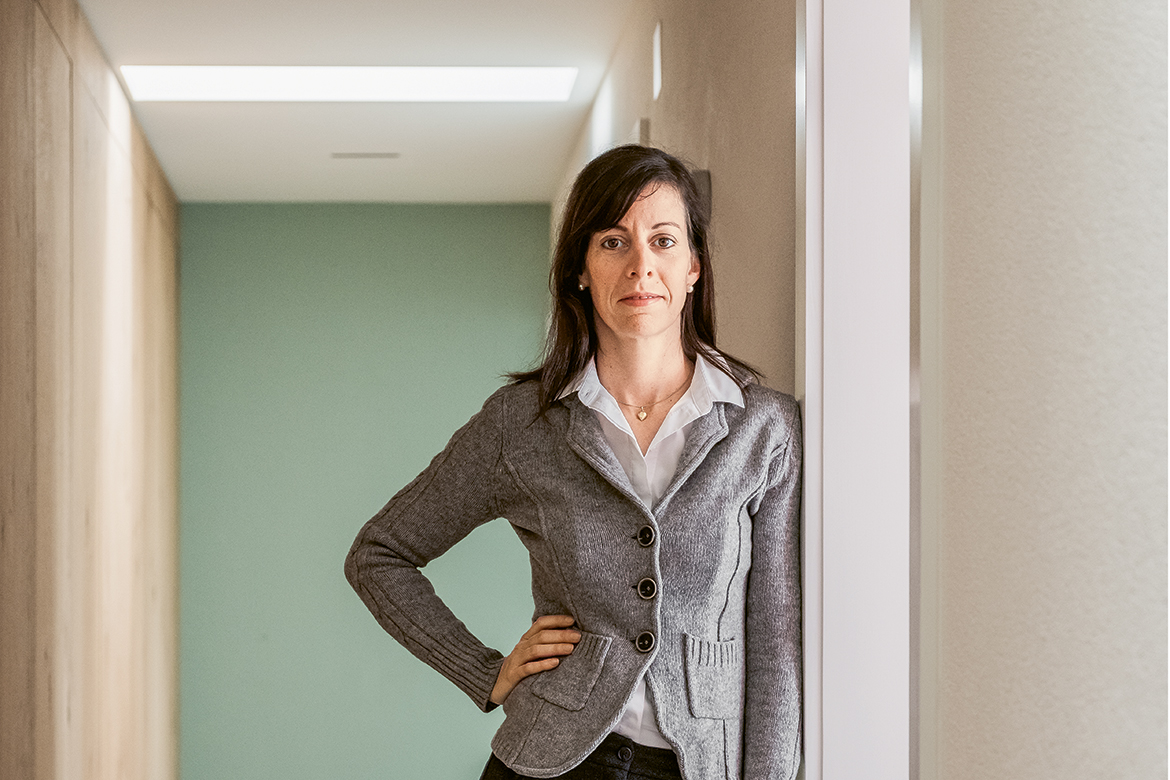
“Swiss women only got the right to vote at federal level – and thus acquired full civil rights – in 1971”, says Katrin Meyer. She’s a philosopher at the University of Basel and an expert in feminist political theory. “But denying women these rights in fact stood in direct contradiction to our first Constitution, back in 1848”, she says.
Article 4 stated: “All Swiss are equal before the law. No one stands in a subordinate relationship to any other”. But this is precisely how many women saw their situation: they were subordinate to men in legal terms, and politically excluded. So they took legal action. In 1886, for example, the Swiss lawyer Emilie Kempin-Spyri demanded legal and political equality. But without success. She argued that the term ‘Schweizer’ – ‘Swiss’ – while a generic masculine noun, in fact implicitly included women. But the courts described this interpretation as “something as novel as it is bold”.
Exclusive democracy
To this day, the electorate in Switzerland decides by referendum with whom it wishes to share its privileges. Meyer sees this as a democratic paradox. Decisions on extending rights are made by those who already possess them, whilst those who are affected are actually excluded from the decision-making process.
Meyer refers to this situation as “un/democratic”. In her opinion, “these procedures negate democracy in the very name of democracy”. This “arbitrary power”, as she calls it, became obvious in 2009 when a popular initiative was accepted that called for a ban on building minarets. For her, the scandal of that vote lay in the fact that such decisions are regarded as having been democratically legitimated. “In the name of democracy, the majority thereby tramples on the fundamental rights of minorities, such as their freedom of religion”. When it comes to assigning political rights to new groups, Swiss discourse today is generally still dominated by the question: “What does their inclusion offer the majority population?” It’s not about: “Do they have a right to codetermination?” Underlying all this is an understanding of democracy that repeatedly blanks out both fundamental rights and individual rights.
72 %
of the world’s population
live in autocracies according to the V-Dem Institute’s Democracy Report of 2025. These account for about half of the countries surveyed (91 out of 179). Roughly a quarter of all countries are currently becoming more autocratic.
And yet a democracy must also determine who has a say in democratic decision-making. After all, if everyone affected were to be taken seriously over every political issue, then in many cases you’d theoretically have to get the whole of the human race to vote. And since that is impossible, democratic states define boundaries for their electorates. In Switzerland, such a boundary used to run between Christian men and Jewish men; later, it ran between men and women. Today, the demarcation line is that of citizenship. As a result of this, Switzerland remains at a federal level one of the most exclusive democracies in the world. Roughly a third of the people living in this country are denied any say in how it’s run. Besides those who don’t possess a Swiss passport, minors are also excluded from voting, as are certain people with disabilities – such as those who are under full guardianship.
Things are more nuanced on a cantonal level. Some cantons practise greater inclusion in their politics, while the democratic deficit is particularly crass in others – such as in the canton of Basel-Stadt, where those adult residents without any political rights are in fact in the majority. How legitimate can a system be if so many people are subject to its laws but are unable to play any role in shaping them?
The prize of naturalisation
For Marc Bühlmann, a political scientist at the University of Bern and the director of Année Politique Suisse, this is precisely where the real yardstick for democracy lies. “It is a process of increasing inclusion”, he says. “From the perspective of participatory democratic theory, a democracy will benefit when as many people as possible get involved and contribute their own perspectives and arguments”. But the practice of Swiss naturalisation runs counter to this idea, for anyone wanting citizenship has to live here for ten years. Even then, not everything is the same for everyone.
A study has shown that the Naturalisation Act of 2018, with its stricter language requirements, systematically disadvantages people who have a low level of educational attainment. It also obliges applicants to have permanent residence already (in other words, a ‘C’ permit) and tightened the rules regarding the receipt of social benefits. The naturalisation process in itself can encourage arbitrariness. The tests that applicants have to sit are by no means regulated in any uniform way. In many places, it’s still the local assembly that decides on whether or not someone can become a naturalised citizen. These assemblies can reject applications without having to justify their decision. The situation is different in those places where it’s the local authorities who make these decisions and are also held accountable for them.
16
year-olds
have been allowed to vote in national and EU elections in Austria since 2007. Other countries also grant 16-year-olds certain political rights: Malta
(voting age: 16), Brazil (voting is voluntary at 16, compulsory at 18) and Germany (several federal states have made the voting age 16 for local and regional elections).
For Bühlmann, this exclusivity reflects the dominant conservative understanding of democracy in Switzerland. “Many cantonal referenda about expanding political inclusion have endured a resounding ‘no’. This is surely a consequence of the belief that people have to know the country, the canton and the municipality before they can be allowed to have a say in running them”, says Bühlmann. “They have to be familiar with the local political landscape and their community”.
“Citizenship in Switzerland is bound up with far-reaching rights of codetermination, and it’s regarded by a conservative majority as a particularly valuable prize that you don’t just share with anyone, and which is associated with high expectations”. He believes that this attitude can explain why groups that were previously excluded are now being integrated only slowly. But such slowness can perpetuate democratic inequality. There is a campaign currently run by an association calling itself ‘Aktion Vierviertel’ (literally: ‘operation four quarters’) that is calling for naturalisation to become a fundamental right. They note that two million out of eight million living in Switzerland today don’t have a Swiss passport. “This causes great harm to democracy”, they say, “so we need a new, bold plan for society”.
Four out of five citizens vote – now and then
Bühlmann believes that this initiative will probably fail. But he is also convinced that the fact that this topic is being put to a vote at all is proof of the strength of direct democracy. It creates an “institutionalised compulsion” to engage in dialogue. Politicians, the media and the public are thereby compelled to engage with these issues repeatedly. In the longer term, this in itself can lead to change, albeit only slowly. “I am a naive optimist”, says Bühlmann, “and I believe that Swiss democracy will continue to grow in terms of increasing inclusion”.
However, even a more inclusive naturalisation policy wouldn’t manage to eliminate inequality altogether. Just because someone possesses political rights doesn’t necessarily mean that they exercise them. “Voter turnout in Switzerland is traditionally low”, says Rahel Freiburghaus, a political scientist at the University of Lausanne. In the referenda held in 2025, it stood at roughly 45 percent, not more. Nevertheless, only very few citizens exclude themselves completely; studies from St. Gallen and Geneva have shown that some 80 percent of those eligible to vote do so at least once every four years.
Whose vote counts more
This so-called selective participation also has its reasons in demographics. “Older people vote more frequently than younger people”, says Freiburghaus. “And the better educated someone is, the higher their income, the greater the degree to which they exercise their political rights”. Herein lies yet another paradox that is typical of democracy. Participation doesn’t automatically reduce inequality, but can in fact exacerbate it. Those who want to participate need the resources to be able to familiarise themselves with complex political topics.
Just how much this plays a role has been proven by a comparative study cited by Freiburghaus. When compared to someone on an average income, those earning more have 1.16 times as much impact on the political process in Switzerland. “There’s a systematic bonus for the rich”, says Freiburghaus. In other words, parliamentary decisions tend to favour those with more money. The reasons for this are all interlinked. Business-related interests are very well organised, while financially powerful actors can buy greater access – and get themselves heard. Then there’s the fact that parliamentarians tend to project their own privileged, lived reality onto the general public.
80 %
of Hungary’s eligible voters
took part in the parliamentary elections there on 12 April 2026 that brought about a political sea change. In the 2022 elections, the turnout was 69.6 percent. In Switzerland, the turnout in the last elections for the National Council (2023) was 46.7 percent; in the EU, the turnout for national elections ranges from 65 to 75 percent.
So-called ‘ordinary’ professions such as mechanics, handymen and shop assistants are underrepresented in the Federal Parliament. And a parliament that doesn’t reflect the composition of society naturally has a skewed perspective. There are differences on a federal level too. When the federal state was established, it deliberately gave greater weight to the votes of rural cantons. Since then, the process of urbanisation has greatly exacerbated this historical imbalance. In the Council of States, the Swiss ‘upper chamber’ where the cantons are represented equally, the current system means that “the vote of someone from the canton of Uri counts around 40 times more than that of someone from Zurich”, says Freiburghaus.
Nevertheless, direct democracy can go some way towards correcting such imbalances. According to Freiburghaus, referenda act as a barometer of the public mood. “They don’t entirely eliminate the advantage enjoyed by those with money, but they do highlight those areas where Parliament’s decisions are out of touch with the public”. For example, it can happen that the politicians in Bern find a particular reform to be sensible, though once people have to decide on it at the ballot box, it can transpire that many perceive it as anti-social or out of touch. The reverse scenario can also happen – sometimes a referendum is passed against the recommendations of Parliament and the government.
Direct democracy prevents social polarisation
But it’s often unclear just how far apart the opinions of parliamentarians and the public lie. Referenda generally offer only a binary choice between ‘yes’ and ‘no’, though this fails to elucidate underlying reasons or nuances. If a question is decided by 51 percent to 49, this actually tells us very little about what helped one side to win. This is why, once the result is known, there’s a race among the different political parties to interpret the outcome.
Nevertheless, satisfaction levels in Switzerland remain high. One reason for this is that direct democracy prevents social polarisation. “You might have voted for the losing side today, but you might be part of the winning majority the next time”, says Freiburghaus. Switzerland’s economic stability and comprehensive public services are also important factors in political satisfaction – in other words, the country functions effectively. For Freiburghaus, however, this is no reason to sit back and assume that all is well. It ought to motivate us to undertake reforms instead: “Stable democracies have to keep developing their institutions while the population still has faith in them”, she says. In many other democratic states, she says, that trust has long since been eroded.
When a nation state alone is not enough
This aspect is also emphasised by Joachim Blatter, a political scientist at the University of Lucerne. “Many no longer believe that democracies can solve today’s problems”, he says. In democratic states, he insists, arguments have to be formulated, conflicts resolved, and power checked through the separation of powers. And this takes time. The problem is exacerbated because many crises can’t be resolved on a national level. Different nation states pool their power so that they remain able to act – which is also the logic behind the European Union.
Rules are more likely to be enforced if states act collectively, rather than individually. And that also applies when they’re up against corporate giants such as Google, Meta or X. If individual states tried to regulate them, “tech barons like Elon Musk would probably just laugh at them”, says Blatter. Things are different when the EU acts as one. Last December, for example, the EU imposed a fine of EUR 120 million on X on account of its lack of transparency. And the EU is pressing ahead with further proceedings – such as in cases where these companies allow rampant disinformation that can endanger democratic elections. “The EU is at least trying to rein in the private power of these platforms”, says Blatter.
12,000
adults
in Switzerland are currently under full guardianship and are therefore not allowed to vote at all.
The picture remains mixed, however. Democratic cooperation on an international level can actually make national democratic processes even more sluggish. The EU also often delivers less than hoped for. According to Blatter, this is because the EU’s democratic legitimacy depends on the governments of its member states taking important decisions on a joint basis. But each individual government also has a right of veto, which in turn can render the EU incapable of acting. As a result, a sense of political powerlessness is growing among the citizens of the EU member states.
The more powers are transferred to a European level, the more frequently citizens find that their voice has little impact at a local level. “Politicians are constantly telling them that something’s impossible to do because it contravenes higher-level law or joint decisions. This is alienating people”, says Blatter.
Exerting influence in other countries
Blatter points to findings that suggest many people have long favoured a more restrictive policy on migration. But liberal elites haven’t been taking these preferences sufficiently into account. Blatter believes that this is creating a breeding ground for “radical, populist, authoritarian revolts within individual countries”. People today are experiencing democracy as a slow, powerless system. At the same time, however, political power is shifting to the European level. The politicians who are gaining the upper hand now are those promising to return political control to a national level, and who claim they want to take decisive action “in the name of the people”.
Blatter would like us to respond to this trend by instituting even more democratic participation. “My idea is that EU citizens should decide at regular intervals in which particularly influential member states they wish to have a say. They should then be allowed to elect a limited number of representatives there”. In this way, Europe’s current top-down systems would be transformed by enabling “democratic influence” from below: the citizens of smaller or weaker countries could then influence the policies of more powerful or disruptive nations. In return, the EU could abolish governments’ right to exercise a veto.
13 %
of people living in the EU
do not have any right to vote in national elections.
But one might pose the critical question as to whether such a model might in fact serve primarily to embolden those who are educated and well-connected politically. It also remains to be seen whether people in Italy – for example – would allow Germans to assume a direct role in their politics (and vice versa). Blatter’s proposal aims to make the EU both more capable of acting and also more democratic. It’s only in this way, he believes, that democratic self-determination can be ensured in the face of major powers and corporations. And this is a challenge that faces Switzerland, too.