Everyday euphoria, everyday panic
In order to fulfil the high expectations they place on themselves, start-up founders and their teams push themselves to the limit. Sometimes even beyond it.

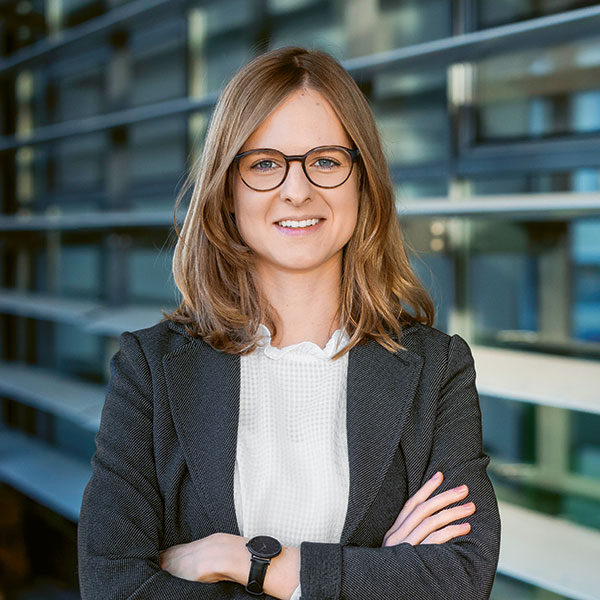
Start-ups promote ‘disruptive’ ideas and innovative technologies – but no one can know for sure if they’ll really catch on. | Image: Lucas Ziegler
Trendy offices, flat hierarchies, and realising big dreams with like-minded people: The working culture in start-ups certainly has its attractions. Many graduates see them as an alternative to a traditional career in big companies or government organisations. “Having your own start-up, or working in one, can give you the chance to get something done in a short space of time and in line with your own values”, says Pascale Vonmont. She’s the director of the Gebert Rüf Foundation and the president of the Startupticker Foundation. “Most people who create start-ups aren’t driven by a dream of making big money. They’re chasing an idea. They want their company to make a contribution to the future, and to make the world a little bit better in the process”.
These founding ideals are also shared by the people who work there, at least according to a survey of 800 start-up founders and employees that was conducted in 2023 by the German Start-Up Association. ‛Flexibility at the workplace’, ‛a sense of community’ and making ‛a visible impact’ were all more important to the survey participants than job security and earning money. No less than 73 percent of company founders are convinced that their new working culture, with its flat hierarchies, flexible working practices and high degree of creative leeway are all unique selling points for start-ups and help them to recruit young, highly educated talent. In fact, the average age of staff at German start-ups is 32 years – significantly lower than the 43 years that is the average in the traditional corporate world. Another typical feature of start-ups is the high proportion of employees with a university degree (86 percent), while they also demonstrate a striking level of job satisfaction: 32 percent of employees at start-ups are “very satisfied”, compared to 22 percent in established businesses. Some 50,000 people are currently employed by start-ups in Switzerland. There have not been any studies about the level of training and job satisfaction among their employees, but they are likely to be similar to what we find in Germany.
But this brave new world of work has its downsides. Investors have high expectations, and working days are usually long and intense. “Start-ups operate in a highly competitive environment”, says Raphael Tobler, the president of the Swiss Startup Association. “Hardly anyone in the business has achieved success with just a 42-hour week. You have to be prepared to put a lot of energy and work into your company during the start-up and growth phases. And you have to be aware that you’re taking part in a marathon, not a sprint”. Tobler advises getting the organisation of a start-up sorted out properly at an early stage, and delegating certain tasks and responsibilities to employees as soon as possible. Otherwise, the growth phase can descend into chaos.
Friendly fire and self-inflicted damage
Phases of rapid growth are typical of start-ups, and that is when major upheavals occur. Cross-team collaboration gradually gives way to specialisation, the organisational charts become more akin to pyramid structures, and the sense of community begins to dwindle. Suddenly, the company founders find themselves confronted with new tasks. They have to conduct appraisal interviews, select department heads and perhaps even dismiss people.
“It’s important for the company founders to ask critical questions of themselves in this phase”, says Vonmont. “Such as: ‘Is this still the right role for me?’ The skills and character traits that a successful manager needs will change as the company develops. You have to be able to know your own strengths and limits”.
The ‘Talent Kick Programme’, jointly initiated with the Gebert Rüf Stiftung, is designed to provide support in this regard. It’s open to students at all Swiss universities. Alongside their main studies, it teaches them how to develop their own business idea within a team, to assess themselves better, and to develop their leadership skills.
Noam Wasserman is an American economist and organisational specialist. While a professor at Harvard Business School, he analysed data about almost 10,000 start-up founders and more than 3,600 start-up companies in the USA. His conclusions merely confirmed the importance of conducting an accurate self-assessment: “If entrepreneurship is a battle, most casualties stem from friendly fire or self-inflicted wounds”, he says.
More and more burnouts
Roughly half of the start-ups analysed by Wasserman failed within five years. In two-thirds of them, he was able to identify “destructive tensions within the founding team and then between the founders and the non-founders who are involved in the start-up”. Often it was inaccurate self-assessments that led to conflict, says Wasserman. “In the early days, the passion for their idea felt by the founding teams can be very useful. It can help attract both employees and third-party capital. Over time, however, this strength can become their Achilles’ heel. Passion and self-confidence can lead start-up founders both to underestimate the resources they actually need, and to overestimate their ability to overcome the challenges they’ll face. All this can jeopardise their start-up”.
Misjudgements, interpersonal tensions and overwork can also jeopardise the health of everyone working at a start-up. LinkedIn and other such platforms offer increasing numbers of autobiographical reports of burnouts among founders, plus tales of depression and anxiety disorders. We can only make a rough guess as to just how many start-up founders and employees fall ill. There are no studies on it.
But clues can be found in the so-called ‘post-mortem reports’ that are popular on the scene and are published on blogs, online magazines and other platforms. The founders and investors of start-ups use these media to explain why their company flopped. The tech company CB Insights has analysed 473 such post-mortem reports and concluded that eight percent of cases registered ‘burnout’ as one of the main reasons for their company’s demise.
The growing range of support services for such cases is also a sign that we’re dealing with very real problems here. Since 2023, for example, the Swiss insurance company Baloise has been offering a webinar on burnout aimed explicitly at company founders. Using the results of a survey of 230 founders, the venture capital company Balderton last year developed a health and fitness programme based on what’s used in professional sports. Their aim is to maintain mental health at start-ups, and thereby also the performance capacity of those involved in them. Recognising founder burnout – and preventing it – has even become a business area in its own right. The start-up Accelerate Health in Berlin, for example, offers psychological support to company founders.
Strengths go hand in hand with mental vulnerabilities
Are start-up founders at particular risk of burnout? “As a rule, these are ambitious people”, says Vonmont. “They’re prepared to invest a lot of energy in their company. And they’re often emotionally highly attached to their ‘baby’. But that brings certain risks with it”. The psychologist Michael A. Freeman conducted a study in which he identified certain mental predispositions that are widespread among start-up founders, and that make it more likely that they will succumb to burnout.
Together with researchers from the universities of Berkeley and Stanford, he asked 242 company founders in California about their mental health: 49 percent stated that they have had at least one mental health problem such as depression (30%), an anxiety disorder (27%), bipolar disorder (11%) or ADHD (29%). In the comparison group, depression (15%), ADHD (5%) and bipolar disorder (1%) were significantly less common. According to Freeman, typical strengths such as courage, creativity and commitment thus often go hand in hand with mental vulnerabilities.
What’s more, start-up founders are confronted with great uncertainties. They rely on so-called disruptive ideas and innovative technologies – but it remains uncertain whether or not these will actually work and be successful. You have to deal with this risk as a start-up founder, says Vonmont.
This is especially challenging in Switzerland because we have a poor risk culture here: “Failure is still mired in shame in our country. This increases the pressure on company founders. That’s why some of them hold on to an idea or to their own role for too long”.
The big fear of the next crash
Michele Matt (37) is a Swiss start-up founder who also felt this pressure and at some point was unable to cope any more. He took ill in spring 2021 and was diagnosed with depression due to exhaustion. Today, Matt admits that he was working a lot, but not excessively. Nor does he want to blame his investors, who didn’t exert any pressure on him. “I put the pressure on myself”, he explains. “I wanted to deliver so that I wouldn’t disappoint the investors, my family, my friends and myself”.
Matt had completed a Master’s in business administration and then worked for several years at big companies in the consulting and banking sectors. In 2015 he founded the start-up ‘MyCamper’ to set up a sharing platform for camping vehicles. His company grew quickly, doubling its turnover every year. It was soon employing 25 to 30 people. The company’s tasks were clearly divided up among the team, but Matt bore a lot of responsibility as its CEO and the chairman of its board of directors.
He was also in charge of financing. “That was undoubtedly too much”, he says. “There was a non-stop roundabout of thoughts in my head. Whether in the evenings, in bed at night or at the weekend, I was constantly chewing over some problem or other and looking for solutions”. Euphoric successes – e.g., an acquisition or concluding yet another financing round – would be followed by feelings of fear and panic: would the company crash?
It didn’t, but Matt fell ill and had to take a longer break. He then decided to take a decision that he “really should have taken much earlier”. He gave up his position as CEO and is concentrating on what he enjoys most: Developing ideas and strategies.
Better together than alone
Today, Matt is ‘only’ the chairman of the board of directors at MyCamper – but he’s happy with his role. He made his burnout experiences public through a post on LinkedIn. He wants “to help break down the taboo on the topic and to raise awareness about it among my colleagues”.
Vonmont is convinced that start-up founders can benefit enormously from the experience of their peers. “In Switzerland, many young CEOs are lone warriors. It’s important that a community should emerge where founders can engage in a more intensive exchange of ideas”. To achieve this, she says, we first have to create the spaces of trust that people need. Vonmont cites the example of the Venture Kick programme and the newly launched Kickfund. “In both initiatives, start-ups and CEOs have been working together over a longer period of time, regularly sharing their experiences and personal challenges in specific forums. This is proving to be very helpful”.