
And it’s 150!
Horizons has been the ‘Swiss research magazine’ for almost 40 years. We look back at some of the images, interviews, figures, analysis and tidbits to show how far it’s come.
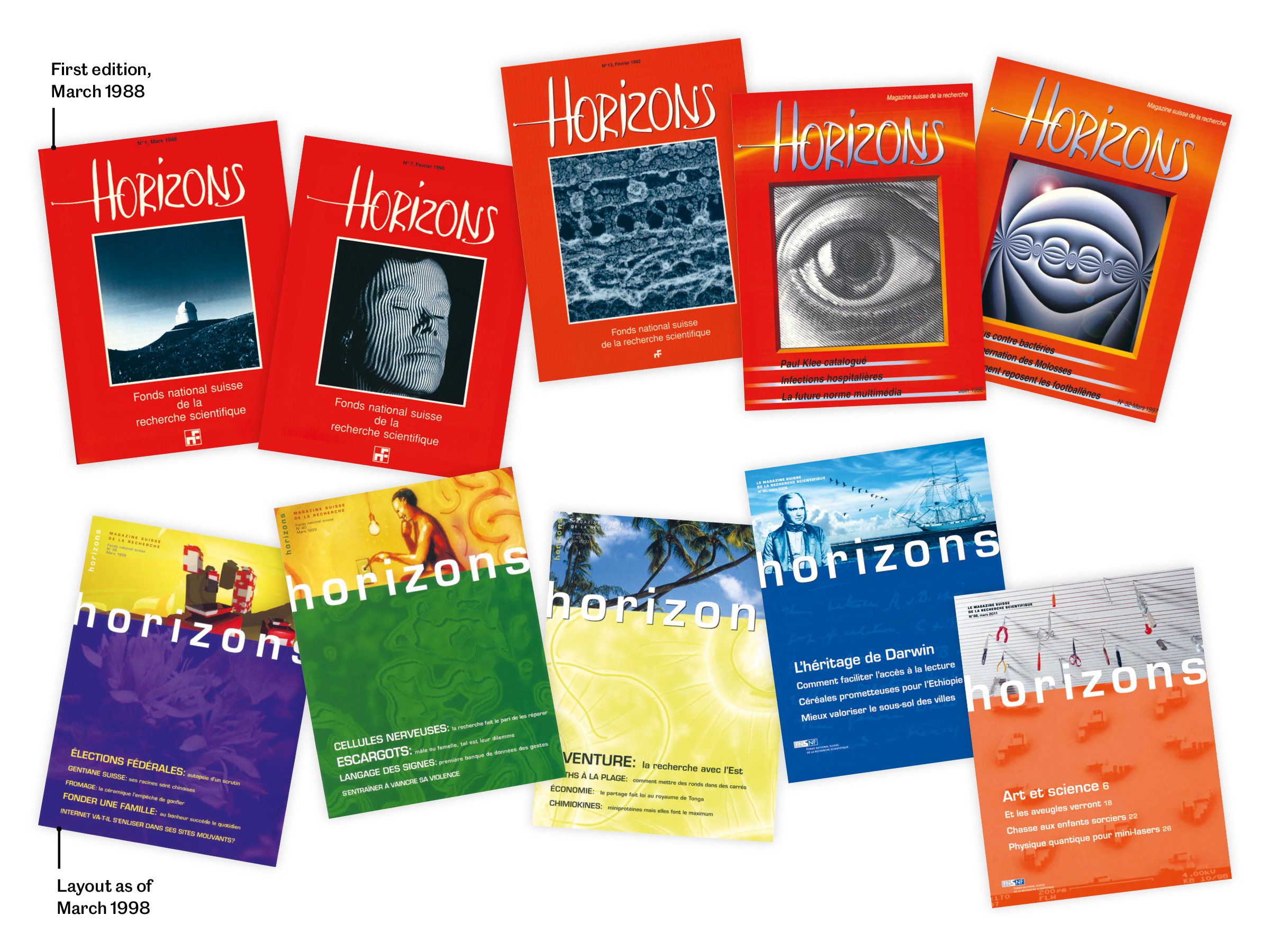
Horizons’ layout remained unaltered for its first ten years. After its relaunch in 1998, it kept its new format for another 15 years. | Graphic: Bodara
More and more opinions
Horizons has been setting the pace in Swiss science journalism since March 1988. It’s changed over that time. The first ‘makeover’ came in 1998. It came as the magazine gained a newly established, dedicated editorial team at the SNSF. In this new form, it became more journalistic and added segments that live on to this day: dossiers composed of multiple articles around a main theme, readers’ letters, ‘in the picture’, portraits and opinions of scientists. Although the cover remained unchanged for another 15 years, in late 2003 there was an internal redesign marking the arrival of cartoons and the multiplication of science briefs.
The next big shift was in 2013. This massive overhaul was the second complete re-design of the magazine. The idea was that the content ‘stays the same’, but is ‘more beautifully packaged’, featuring more elaborate illustrations and a two-page cover image. This unflinching revolution came hot on the steps of the Swiss Academies of Sciences discreetly joining the editorial team. In 2017, Horizons went online in all three language versions. The third and most recent shake up came in 2020, bringing Horizons into its current form, where emphasis is placed on visual language and aesthetics. This change also dedicated more space to reporting and added new sections covering research policy.
There was also a sense of continuity alongside all these changes. Even the very first issue was published in both French and German. And besides information about institutions and short articles on research projects, it also featured longer articles. Since then, these longer contributions have always covered topics from biology, medicine, other natural sciences, the humanities and the social sciences. Research policy has become more significant as a topic in Horizons, but the balance between the disciplines has remained. This is an approach based on the conviction that “today, the transfer of knowledge – from the research sphere to the general public – has become an urgent necessity”, as André Aeschlimann, the then president of the SNSF Research Council, wrote in 1988 in the magazine’s very first editorial.
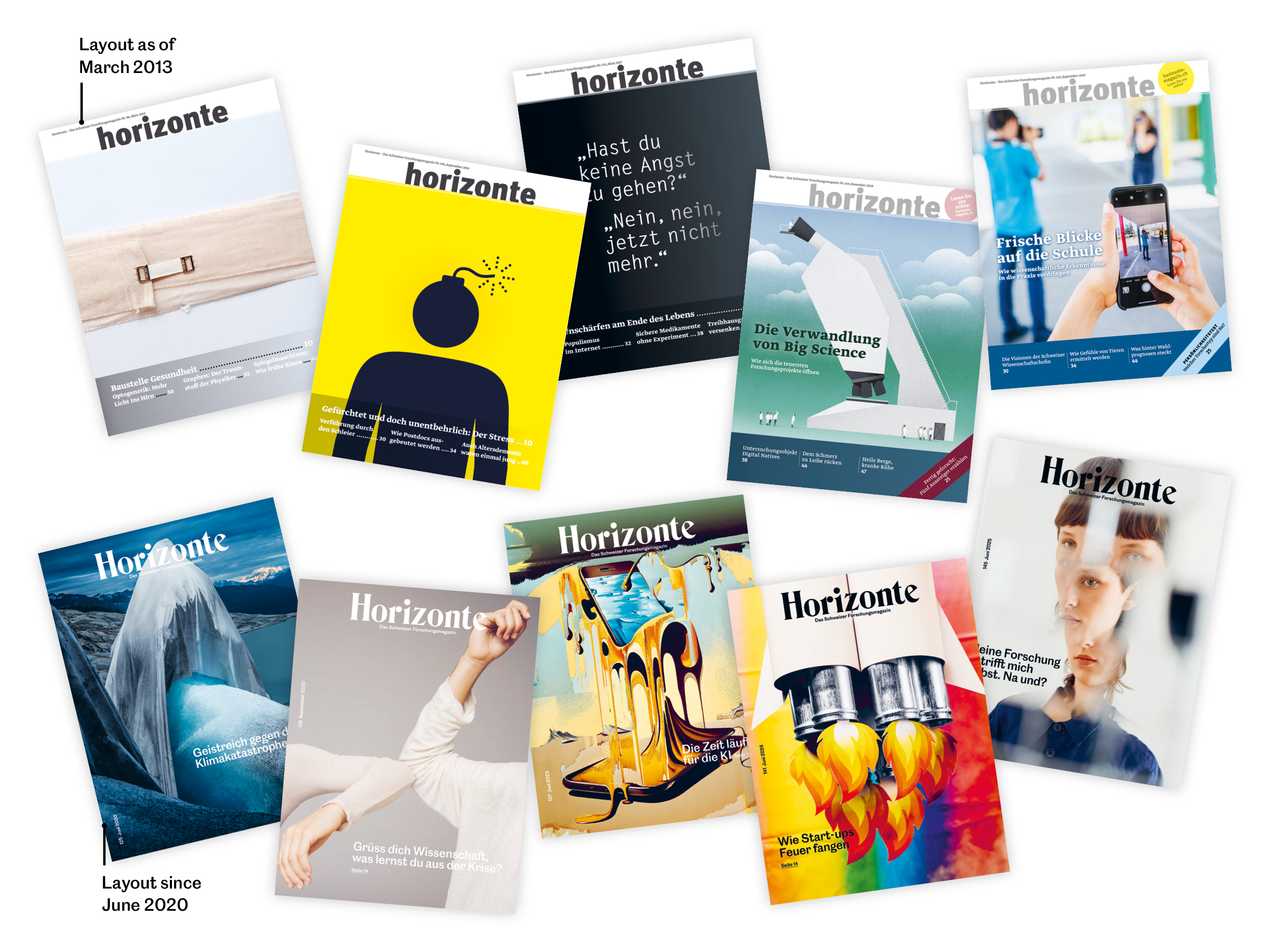
The design with the two-page cover image was introduced in 2013 and was retained for seven years. Horizons was first published in its current form back in 2020. This new design helped it to win the European Magazine Award in 2021, which honours publications for their outstanding concept and design. | Graphic: Bodara
Not less complex, but different
“The other side of the coin to jargon or coded language is oversimplification and the removal of scientific value”. These are words from an editorial in 1990 emphasising the importance of a good linguistic balance to convey science to the general public.
To study the true linguistic north of the Horizons compass, we can use, for example, the Quebec online tool Scolarius. It assesses the complexity of writing based on the length of words, sentences and paragraphs. We randomly chose twenty articles (in French) and analysed them. They covered the period from 1988 and 2026 and showed on average a high-school level. There were at times significant variations from one article to another. Moreover, no correlation among topics, eras or complexity were found. For sure, some turns of phrase in the older editions now appear old-fashioned, but the target level of language seems to have remained the same.
Changes in the use of language also constitute solid indicators of social trends. Our research in the archives of the French-language versions of Horizons shows increases in the frequency of the word ‘chercheuse’ – i.e., the feminine form of ‘researcher’ – and inclusive couplets, e.g., ‘chercheuses et chercheurs’ over the decades, as women have gained ground in the world of research.
And language allows us to explore theories, e.g., do we cling to figures in the face of instability? In any case, the word ‘statistics’ has appeared 1.5 times more often since 2021 than in the period from 1991 to 2000. And ‘crisis’ quadrupled in frequency in the same period. Optimists will say: it’s not about how many times they appear, but how (much less) seriously they are taken!
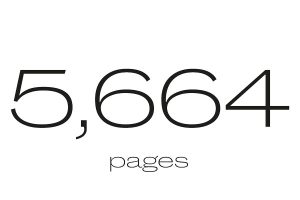
have been published in Horizons. The magazine started out small with just 12 pages per issue in 1988, growing slowly to 16 in 1990 and then 20 in 1994. It was 1998 that saw the first major redesign of the layout, when it almost doubled in length and began to bring a much richer selection of content in what became a 36-page publication. By the end of 2012, it was once again seen as being cramped, at which point Horizons jumped to 44 pages – for just two issues – before finally finding the space to breathe in 2013 when it reached its modern 52-page layout. This was seen as still sufficing in 2020, when the aesthetics were last rebooted.
Perennial topics
Ever since Horizons became a magazine for scientific journalism, every issue has had a special feature topic to which a large number of pages have been devoted – such as ‘basic research’ or ‘democracy’. Each feature topic aims to shed light on a development with special societal relevance, or a pressing issue from the world of science.
Over the past 150 issues, certain thematic areas have been our feature focus on several occasions. Top of the list are the climate and environmental protection with five issues, then digitalisation with four (including the development of the Internet and smart machines). They are closely followed by medicine and the healthcare system, collaborations between science and politics, and then water – all of these with three issues each. Migration, the Alps and scientific experts have each been featured twice.
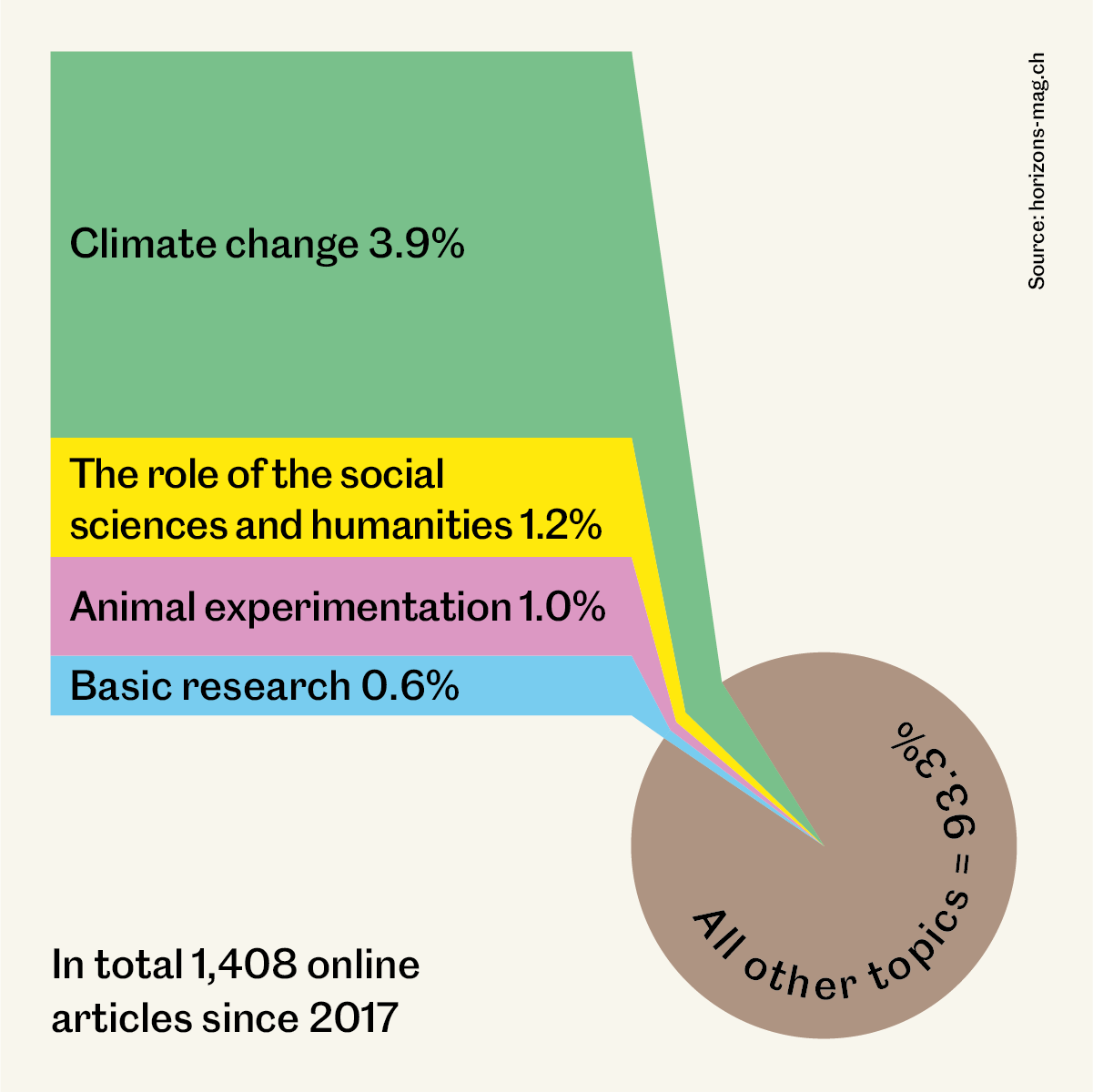
There’s also been a variety of more specific topics – such as silicon, AIDS, CERN, the prison system and equality, each of which has been the focus of several individual articles. It’s the topic of basic research that threads its way through the most issues, starting with the very first editorial. In our present issue – no. 150 – we’ve made it our feature topic for the first time since 1988. However, it’s only been the actual topic of 0.6 percent of all our articles since Horizons went online. Climate change, by contrast – the subject with the highest share of feature topics – accounts for a non-negligible 3.9 percent of all articles published since 2017.
Some of our topics were also similar to the prime ones in the UBS ‘Worry Barometer’ for 2026, e.g., health, the environment/climate and asylum policy. Others that feature prominently on the UBS list include retirement provision, relations with the EU and rising housing costs. Perhaps this could be a hint as to possible future feature topics for Horizons?
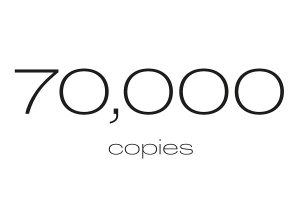
This record print run was for the Horizons issue of September 2019. It was an edition dedicated to schools and led to larger numbers being sent out through teachers’ associations. Historically speaking, print runs stretched from a little under 13,000 to more than 55,000 copies per issue between 1998 and 2014. They plateaued somewhere above 50,000 between 2013 and 2020 before decreasing slightly since. Just over 42,000 copies of Horizons were printed on average per issue in 2025.
Evidence-based speculation
“The likelihood of an epidemic is not small”, reads the headline of a Horizons interview with the epidemiologist Kathrin Mühlemann back in 2004. She was actually thinking of bird flu, but in that same interview, she also spoke about the virus strain that sent the world into lockdown in 2020. The things she had said over 20 years ago were still true during the Covid pandemic: “The old control mechanisms remain of great importance. Setting up barriers, isolating people, and keeping things hygienic”. Luciano Maiani was the Director-General of CERN back then, and in our interview with him in 2003 he correctly predicted that the Large Hadron Collider in Geneva was more likely to discover the Higgs boson than Fermilab in the USA, “because of the number of particle collisions required”. When we look back at old articles, we can see that researchers were often correct in their assessments at the time.
Some recommendations from researchers have since been taken on board – albeit not straightaway. In 2008, as part of her study on gender equality in research funding, Julia Leemann concluded that a researcher’s care responsibilities ought to be recognised when assessing their CVs. “This is still pretty much a taboo subject”, she concluded at the time. Since 2022, the SNSF has actually acknowledged interruptions on account of parenthood when calculating a researcher’s ‘academic age’.
Then there are past statements on research policy that are simply no longer accurate today. In 2016, the journalist Roland Fischer wrote the following in an article on dual-use research at universities: “Many are of the opinion that asking about military research is something purely hypothetical”. But the opposite has become true since the invasion of Ukraine. In 2025, Dominque Foray of EPFL wrote in Horizons that “military agencies must work in cooperation with Innosuisse and the SNSF”.


