Admitting uncertainty is the real breakthrough
Both basic and applied research suffer from an overpromising rhetoric, says the integrity researcher and psychiatrist Joeri Tijdink. Here is his critique of science jargon.

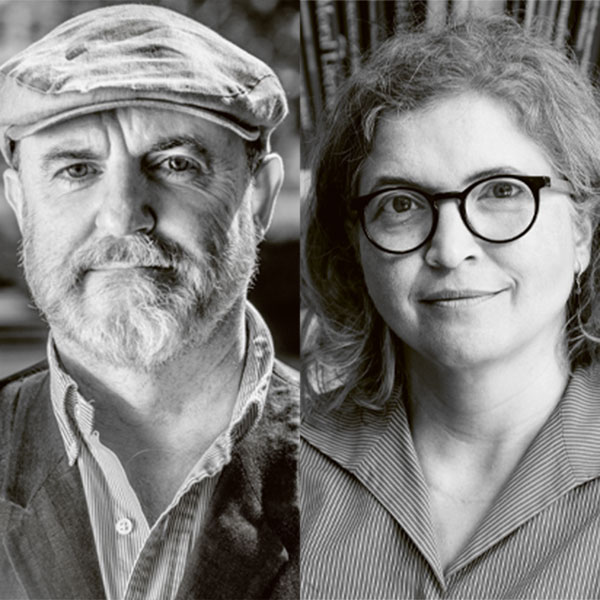
It’s very rare for a ‘blockbuster’ drug to be developed. This is why we should change the general expectations of research and the way we communicate it, says Joeri Tijdink, who’s exploring research culture and research quality. | Photo: Philotheus Nisch
Science is drowning in superlatives. Words like ‘groundbreaking’, ‘paradigm-shifting’ and ‘transformative’ fill our grant applications, press releases, abstracts and presentations, and yet they rarely connect to anything we can recognise as reality. Ten years ago, we showed in a study published in the British Medical Journal that this is more than a hunch: across four decades of abstracts in biomedical literature, the frequency of positive words such as ‘novel’, ‘robust’ and ‘unprecedented’ rose several-fold.
A decade later, my impression is that the problem has worsened. Researchers are all still trying to throw a little paradigm-shifting party, and the funders have joined in. They ask for ‘impact’, for ‘innovation’, for ‘state of the art’, for ‘excellence’. Awkwardly, few of us could say precisely what any of those words really mean. The inconvenient truth is that most of these projects never deliver the groundbreaking results we promised. And most of us have almost certainly never witnessed a paradigm shift during our careers. When I ask colleagues when they last lived through such a shift, they murkily smile and change the subject.
It matters to be critical of these words, because language is not innocent. The words we use towards our peers, our mentees and our students are quietly internalised by everyone. So, watch what happens to us when a funder signals that it wants groundbreaking, innovative results and little else. We start praising our own ideas to the blue skies in our proposals and feign a confidence we do not have. In the writing that follows, the caveats are sanded off before the abstract is finished.
And we slowly begin to believe it. We come to think that science delivers only breakthroughs, that it is forever about to cure cancer and that it routinely rescues lives. This is what Daniel Sarewitz, a professor of science and society, called the myth of “infinite benefit”: the assumption that more and bigger science automatically translates into societal good.
The youngest researchers actually pay the biggest price for this illusion. They read a literature full of triumphs and start to distrust themselves: why is everyone else publishing breakthroughs while they are stuck in a lab with results that do not confirm an attractive new hypothesis? But the fault is not theirs. It is in the story we keep telling. We will not find the cure for all cancers, and pretending otherwise only deepens the pressure. The admission ‘I am not sure’ should be rewarded as an honest expression, as an encouragement and as a moment that is more valuable than the feigning of certainty. Above all, it should not be perceived as a confession of failure.
False competition between basic and applied research
But beneath the rhetoric, one distinction does real work, and it deserves better than the buzzwords piled on top of it: the line between basic and applied research. Although it is certainly not black and white, the distinction is helpful and worth keeping. The terms simply mark the orientation of the work: whether the immediate aim is to understand something or to use it. Neither is a boast. However, the overpromising is shared and afflicts both sides in exactly the same way.
Applied research is pushed to guarantee ‘impact’ and ‘innovation’. Basic research is pushed to promise ‘breakthroughs’, ‘driven by curiosity’ and ‘blue-sky perspectives’ to qualify for its own protected purse. These buzzwords function as eligibility signals in calls for research proposals and become tacit checkboxes, so researchers reverse-engineer their applications to fit the label rather than the research question.
As a consequence, each field becomes quietly convinced of its own superiority. One group starts to believe their discoveries are the backbone of every breakthrough. The other points to societal impact. Yet both play an equally crucial epistemic role: society needs basic research to work out how matter behaves, and those efforts are lost in the absence of applied research, which elevates that understanding to the level of utility. Separating the two may be useful, but placing them into a hierarchy is artificial, subjective and prone to personal biases. Besides, understanding cognition on the level of neurones is not the same as conducting a clinical trial on depressive symptoms. Without the former, there is no latter.
What the two also share is their relationship with uncertainty. Basic research is deeply unsure of its eventual impact, or whether there will be any follow-up at all. Results that do not confirm the hypothesis are not published and rarely welcomed, and researchers continue to persuade funders of a value that is not yet visible. Hence, the buzzwords. Applied research faces a similar problem: its real worth often only emerges after years of follow-up.
Let’s embrace uncertainty!
Neither side is rewarded for honesty. Both are pushed to overpromise. When research agencies try to persuade politicians to keep funding science, they usually recall the success stories. For example, there is the breakthrough story of the German-Turkish star-research couple who commercialised mRNA vaccination during the pandemic. But this is the exception. Singling it out is unfair and misleading, and it omits the thousands of studies that did not lead to any breakthrough. For sure, there is value in convincing politicians. That said, at least from inside academia, we should think further and reflect more on this.
Presenting the exception as the rule is misleading. It’s not because breakthroughs don’t matter, but because they obscure how claiming a rare win involves funding a great many apparent failures. This is called ‘survivorship bias’. If the success stories are few and far between, maybe we should not reward that many ‘innovative’ and ‘groundbreaking’ research projects promised by applicants for monies.
The buzzwords cast a shadow as much as they shine. Work that does not fit becomes harder to fund and publish. Take replications, descriptive research, confirmatory studies. They are often set aside, not for lack of merit but for their poor fit with the buzzwords that funders and publishers require. This is research waste in slow motion.
Another victim of overpromise is basic research itself. This is the open-ended kind whose pay-off – if it ever comes – is unpredictable and often occurs only decades later. This is not a flaw in the process; it is intrinsic to the mode of research. Only a society with the patience to wait for results from a research process that took years will reap the rewards of such work. If investment in research was funded by commercial entities, not one of them would find the cash to back that level of uncertainty.
A fictitious map is of little use
Behind the fog of breakthroughs and impact, the actual goal of science gets forgotten: the reduction of uncertainty knowing that certainty is not available to anybody. The claim is not mine; the mathematician and engineer Claude Shannon defined information as the resolution of uncertainty – in a technical sense. In a similar spirit, one influential way of thinking about research treats inquiry as the gradual updating of belief – or certainty – in the light of evidence: we end a little less unsure than we began. This is called Bayesian reasoning. A result earns its keep by leaving the world slightly less open to question.
It may, however, sound awfully comfortable for researchers to say: grant us money and kindly leave us alone to reduce uncertainty. When society accuses us of living in ivory towers, the temptation is to respond with bigger promises: medical cures, economic growth, jobs. That is exactly what steers us away from the truth, because once you promise a breakthrough, you can only underdeliver.
It’s better to answer by saying that honesty about uncertainty is value we hand back to society. Science, in almost every discipline, does not deliver final truths. It moves us closer to them without ever quite succeeding. Each rigorous study nudges the plausibility of a finding in some direction – up or down. If the result is positive, it raises our confidence that the finding is true; if negative, it tempers it. And each repetition increases the probability that our finding corresponds to reality.
Medicine makes this tangible. Patients are not well served by clinicians who claim a level of certainty the evidence cannot support. They benefit from physicians who can say how confident the data allow them to be, and exactly where that confidence stops. An accurate map of what we know and do not yet know is more useful than a precise map that contains fictitious elements. Society should support those researchers who are not so sure of themselves and who reserve a certain humility towards not only their own findings but also everyone else’s. And scientists should educate funders, publishers, colleagues and students alike.
We should reform research assessment so that it rewards rigour and not groundbreaking results. Furthermore, funders could reward preregistrations and replications of studies instead of expecting us to write our articles as if those were the results anticipated all along. We will most likely cure neither dementia nor depression, nor discover a one-size fits all treatment for psychosis, but we can reduce the uncertainty around their treatment and prognosis.
The real paradigm shift
The taxpayers have every right to this uncertainty. What serves them badly is our overpromising. A public that has been told the truth about uncertainty is far better placed to trust science when it matters – for example during a pandemic – than after having been conditioned to expect miracles: the public would otherwise feel betrayed when they do not occur.
If we adopt the reduction of uncertainty as our motto, the orientation of research will change. Attention would move from outcomes to process, from the finish line to the road towards it and from the headline to the rigour beneath it. The words worth elevating would be ‘reliability’, ‘rigour’ and ‘reproducibility’. They’re neither glamorous, groundbreaking nor Nobel-Prize worthy. But they describe what science is actually for. The core of science is not the quest for infinite breakthroughs. It is piecing together all those small bits of the puzzle that, together, add up to an imperfect, scattered and incomplete picture.
Changing the words we use when we talk about research is harder than it sounds. No breakthroughs, but follow-throughs; no innovation, but replication; no groundbreaking results, but nuanced findings that open a conversation. Robert Merton placed organised scepticism among the core norms of science: the duty to doubt every claim, our own included. Perhaps the most sceptical, yet promising, act left to us is to doubt our own adjectives. If we manage to change our vocabulary, if we genuinely improve how we speak about ourselves, our results and our science, then it really will be groundbreaking, innovative and, yes: it would finally be a true paradigm shift.
Joeri Tijdink is an associate professor at the department of Ethics, Law and Humanities at the Amsterdam University Medical Center in Amsterdam.