
Gut bacteria help fight tumours
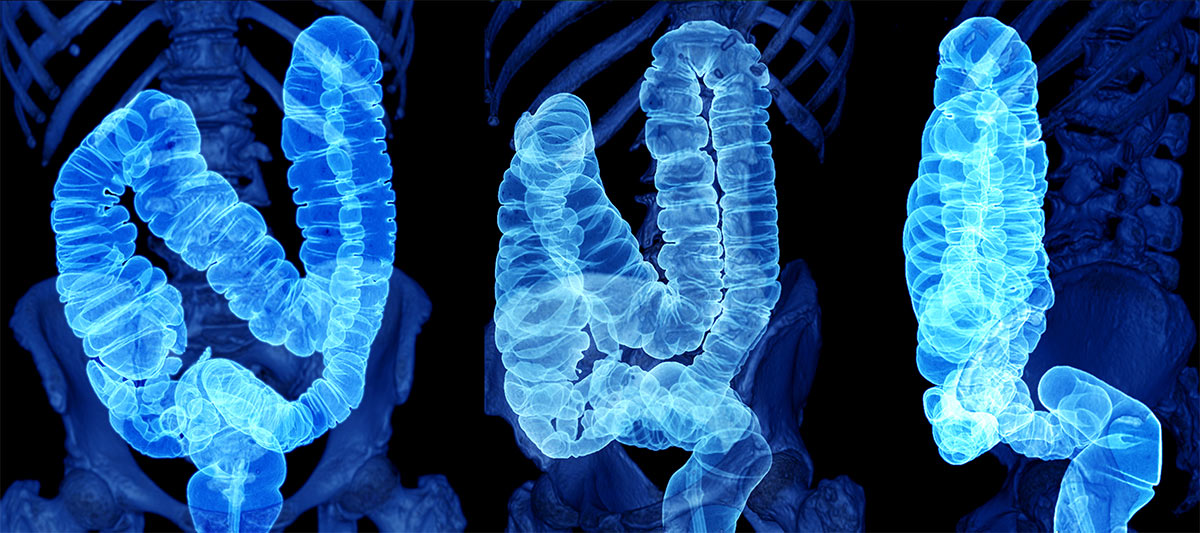
An image of an intestine, compiled using computerised tomography scans. | Photo: iStock
A specific type of white blood cell called TANs (tumour-associated neutrophils) can infiltrate tumours and promote the growth of cancer cells. However, TANs sometimes have the opposite effect in colorectal cancer, where their presence is associated with a favourable clinical outcome. Researchers at the Università della Svizzera Italiana have now uncovered the mechanism involved. TANs carry a receptor called Siglec-14 on their surface to which certain bacteria in the gut microbiome can bind. This triggers the production of substances that kill the tumour cells.
Remarkably, this process only works in people who can both produce a functional form of the receptor and have the right bacteria in their gut. “This illustrates how multifactorial and individualised the fight against cancer is”, says the cancer researcher Giandomenica Iezzi, whose team is now researching into compounds that can activate the receptor in a similar way.